Buying Direct Online vs Local Commercial Equipment Dealers: Cost Analysis
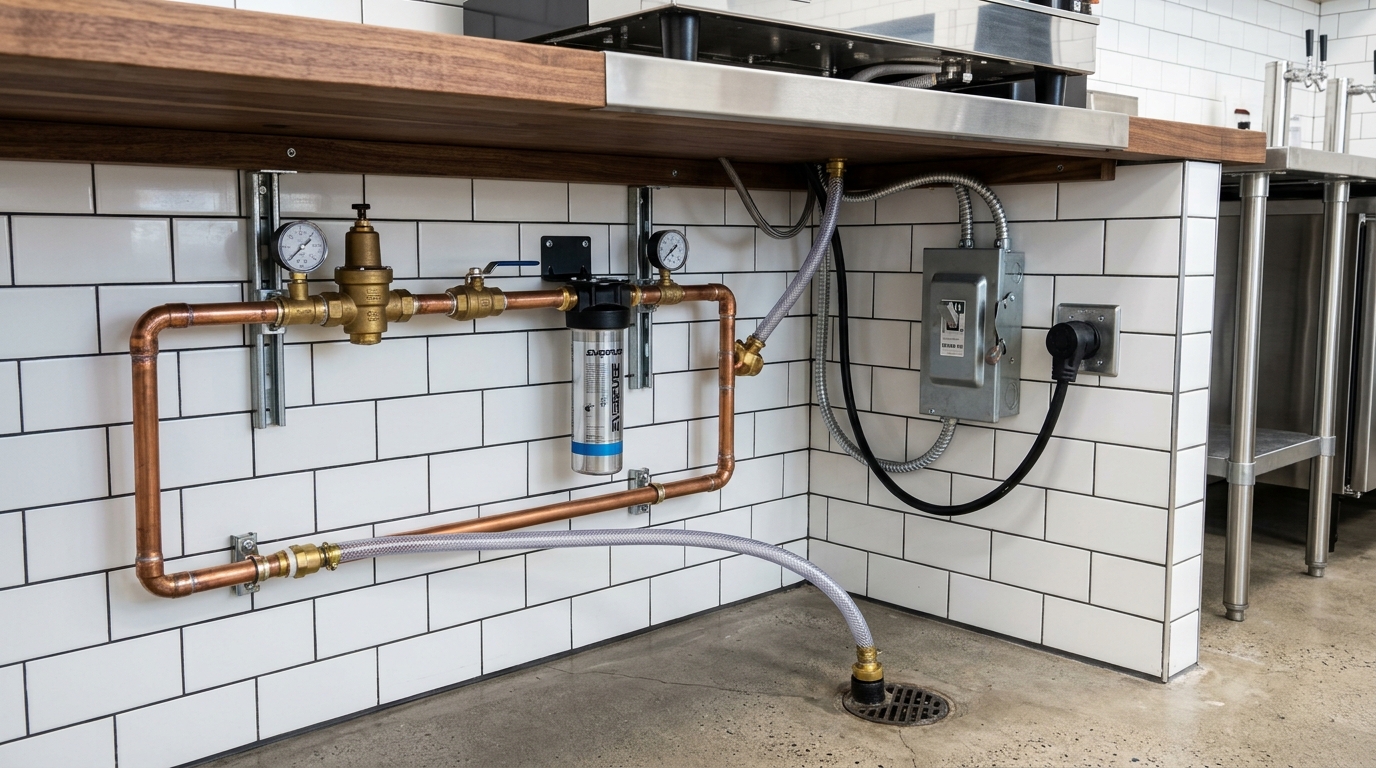
When shopping for a commercial espresso machine and brewing package, a prospective coffee shop owner is immediately confronted with an apparent price disparity.
Browsing an online restaurant supply warehouse or discount drop-shipper, they see a brand-new 2-group commercial espresso machine listed for $18,400 with “Free Freight Shipping.”
They contact an authorized local commercial coffee equipment dealership in their metropolitan area for the identical make and model, and receive a formal quote for $20,200—a seemingly painful $1,800 premium.
To a cash-strapped startup founder trying to stretch their opening budget, the logical choice seems obvious: buy it online, save the $1,800, and pocket the difference.
This calculation is one of the most dangerous illusions in commercial hospitality. In reality, purchasing high-voltage, high-pressure commercial coffee equipment from an online drop-shipper is rarely cheaper. By the time the operator pays for residential freight liftgate surcharges, uncrating labor, certified installation, water filtration validation, and out-of-pocket warranty labor, the online “discount” routinely ends up costing $2,500 to $4,000 MORE than the local dealer’s quote.
Even worse, the online buyer has alienated the very local service technicians they will desperately need when a boiler solenoid sticks on a holiday weekend.
This comprehensive buying guide provides cafe owners with an objective, total-cost-of-ownership (TCO) breakdown comparing online drop-shippers with local authorized commercial dealerships.
1. The Anatomy of Freight Drop-Shipping: The “Curbside” Nightmare
The primary difference between online restaurant retailers and local equipment dealerships begins the moment the machine leaves the factory floor.
+-------------------------------------------------------------------------+
|                  THE ONLINE DROP-SHIP FREIGHT REALITY                   |
+-------------------------------------------------------------------------+
|                                                                         |
|  [ONLINE DROP-SHIP WAREHOUSE]                                           |
|         |                                                               |
|         v (Common Freight LTL Carrier: 3 Transfers, High Shock Risk)    |
|  +-------------------------------------------------------------------+  |
|  | CURBSIDE DELIVERY BY INDEPENDENT FREIGHT TRUCKER                  |  |
|  | - Driver lowers 280-lb wooden crate onto street sidewalk.         |  |
|  | - Driver REFUSES to cross property threshold or enter building.   |  |
|  | - Driver demands signature within 5 minutes and drives away.      |  |
|  +-------------------------------------------------------------------+  |
|         |                                                               |
|         v                                                               |
|  [CAFE OWNER'S IMMEDIATE CRISIS]                                        |
|  * 280-lb wooden crate sitting on the outdoor sidewalk in the rain.     |
|  * No crowbars, no pallet jack, no furniture dollies on-site.           |
|  * Owner signs delivery receipt without uncrating -> Concealed damage   |
|    liability is 100% TRANSFERRED to the cafe owner!                     |
|                                                                         |
+-------------------------------------------------------------------------+
The Pitfalls of Common Carrier LTL Freight
- Curbside Delivery Means The Curb: Standard commercial freight contracts define delivery as “tailgate or curbside.” The freight driver is under zero legal or contractual obligation to help you wheel the machine up a curb, through your front door, or onto a counter.
- The “Concealed Damage” Trap: High-end espresso machines contain fragile internal capillary tubes, glass sight gauges, brass boiler castings, and digital PID displays. In transit across multiple regional cross-dock terminals, pallets are frequently dropped by forklifts. If you sign the freight driver’s Bill of Lading (BOL) without unscrewing the crate and performing a 20-minute inspection, the freight carrier will deny 100% of damage claims once the driver leaves.
- Hidden Freight Surcharges: Online “Free Shipping” almost universally excludes:
- Liftgate Delivery: ($125 to $175) Required if your cafe lacks a commercial 48-inch high loading dock.
- Limited Access / Construction Site Delivery: ($100 to $250) Applied to any address without permanent commercial retail zoning.
- Delivery Appointment Notification: ($50 to $75).
2. White-Glove Local Dealership Service: Bench-Testing & Commissioning
When you purchase through an authorized local commercial coffee equipment dealer (such as Black Rabbit Service, Espresso Parts, Prima Coffee, or certified regional service companies), the procurement workflow is completely inverted.
+-------------------------------------------------------------------------+
|                  LOCAL DEALER WHITE-GLOVE WORKFLOW                      |
+-------------------------------------------------------------------------+
|                                                                         |
|  [MANUFACTURER FACTORY] -> Shipped directly to Dealer's Tech Facility   |
|                                         |                               |
|                                         v                               |
|  +-------------------------------------------------------------------+  |
|  | 48-HOUR WORKSHOP BENCH-TESTING & COMMISSIONING                    |  |
|  | - Uncrate, inspect for shipping damage, file internal claims.      |  |
|  | - Connect to 220V power, reverse osmosis water, and drain trough. |  |
|  | - Heat to operating temp: Test PIDs, flow meters, pressure stat. |  |
|  | - Catch "infant mortality" component failures in shop, NOT cafe!  |  |
|  +-------------------------------------------------------------------+  |
|                                         |                               |
|                                         v                               |
|  +-------------------------------------------------------------------+  |
|  | WHITE-GLOVE SCHEDULED ON-SITE DELIVERY & INSTALLATION             |  |
|  | - Two uniformed technicians arrive in dedicated service van.      |  |
|  | - Safely lift 220-lb machine onto counter using suction grippers. |  |
|  | - Perform certified electrical & plumbing connections.            |  |
|  | - Chemical water test sign-off (Hardness, TDS, Chlorides).        |  |
|  | - Program customer volumetric recipes and train staff.            |  |
|  +-------------------------------------------------------------------+  |
|                                                                         |
+-------------------------------------------------------------------------+
The Incalculable Value of Pre-Delivery Bench Testing
Modern commercial espresso machines are complex electromechanical assemblies. Roughly 3% to 5% of new commercial espresso machines arrive from European factories with an “infant mortality” defect:
- A brass compression fitting on a capillary line that wasn’t torqued to spec, weeping a slow drop of water onto a circuit board.
- A loose quick-connect spade terminal on a 220V boiler heating element.
- An over-tightened flow meter impellor that binds under hot water expansion.
If you buy online, that defect reveals itself on the morning of your grand opening. You have a broken machine, a line of customers, and no technician.
When you buy through a local dealer, the machine spends two full days on their service bench. The technician catches the weeping fitting, tightens the wire, swaps the defective flow meter, and confirms thermal stability before the machine ever enters your building.
3. The Warranty Catch-22: Parts-Only vs Parts-and-Labor Realities
This is the single most misunderstood clause in the commercial coffee industry: almost no espresso machine manufacturer provides a factory labor warranty.
+-------------------------------------------------------------------------------+
|         COMMERCIAL COFFEE EQUIPMENT WARRANTY STRUCTURE COMPARISON             |
+-------------------------------------------------------------------------------+
| Warranty Vector                 | Online Drop-Ship Retailer           | Authorized Local Equipment Dealer     |
|---------------------------------+-------------------------------------+---------------------------------------|
| Replacement Parts Coverage      | 12 to 24 Months (Covered by Factory)| 12 to 24 Months (Covered by Factory)  |
| Technician Labor Coverage       | **$0.00 (ZERO LABOR COVERED!)**     | **100% COVERED (12-Month Dealer Labor)**|
| Technician Travel / Trip Charge | You pay full portal-to-portal rates | Included in local service radius      |
| Emergency Weekend Surcharges    | You pay $250 - $450/hour out of pocket| Covered or heavily discounted under SLA|
| Warranty Claim Paperwork        | You must diagnose part, submit RMA, | Dealer handles 100% of factory RMA,   |
|                                 | ship broken part back at your cost  | stock pull, and factory filing        |
| Loaner Machine Availability     | NONE                                | Provided if machine requires shop pull|
+-------------------------------------------------------------------------------+
How the Online “Discount” Evaporates on the First Service Call
Imagine you buy an espresso machine online. Four months in, Group 1 stops brewing because a 3-way solenoid valve coil burns out.
- You call the online vendor. They say: “We are an authorized reseller. Call the manufacturer’s technical support line.”
- You call the manufacturer. They say: “We will gladly send you a free replacement $45 solenoid valve under warranty. Please have your certified commercial technician diagnose the machine, fill out this 4-page warranty RMA claim form, and return the defective valve.”
- You call a local service company. They dispatch a technician:
- Diagnostic trip fee: $165.00
- Initial labor (1 hour): $140.00
- Return trip to install replacement part when it arrives 5 days later: $165.00 trip + $140.00 labor.
- Total Out-of-Pocket Expense for a “Free Warranty Part”: $610.00!
If you purchased through the local dealer, you make one phone call. Their technician arrives in a van carrying the replacement solenoid, swaps it out in 20 minutes, files the factory paperwork, and hands you an invoice that reads: TOTAL DUE: $0.00 (Covered under Dealer 1-Year Labor Warranty).
4. Total Cost of Ownership (TCO) Head-to-Head Spreadsheet
Let us examine the true, comprehensive mathematical cost of purchasing a standard $20,000 commercial equipment package (2-Group espresso machine, water filtration system, and two grinders) through an online retailer versus an authorized local dealer.
+-------------------------------------------------------------------------------+
|             TOTAL COST OF OWNERSHIP (TCO) COMPREHENSIVE SPREADSHEET           |
+-------------------------------------------------------------------------------+
| Cost Itemization                | Online Drop-Shipper (Webstaurant/Etc.) | Authorized Local Commercial Dealer    |
|---------------------------------+---------------------------------------+---------------------------------------|
| Base Equipment Price            | \$18,400.00 (Apparent \$1,800 savings)| \$20,200.00 (Full MSRP Quote)         |
| Freight Shipping                | \$0.00 ("Free Shipping" promotion)    | Included in dealer delivery fee       |
| Freight Liftgate Surcharge      | \$150.00                              | \$0.00 (Handled in dealer truck)      |
| Pallet Jack / Uncrating Labor   | \$250.00 (Hired movers or hand labor) | \$0.00 (Included in white-glove setup)|
| Disposal of Wooden Crates       | \$100.00 (Commercial dumpster fee)    | \$0.00 (Dealer hauls packing away)    |
| 48-Hour Workshop Bench-Testing  | \$0.00 (Not performed; risk accepted) | \$0.00 (Included in dealer prep)      |
| Certified On-Site Installation  | \$850.00 (Hired independent technician)| \$0.00 (Included in dealer quote)     |
| Water Hardness & SCA Sign-Off   | \$150.00 (Technician test kit & form) | \$0.00 (Certified dealer validation)  |
| Year 1 Routine PM Service (x2)  | \$500.00 (Out-of-pocket tech labor)   | \$0.00 (Included in 1-Year PM package)|
| Year 1 Minor Warranty Labor Call| \$450.00 (Out-of-pocket labor/travel) | \$0.00 (Covered under dealer warranty)|
| Dedicated Emergency SLA Priority| None (Treated as non-client call)     | Prioritized 2-to-4-hour response      |
|---------------------------------+---------------------------------------+---------------------------------------|
| TRUE DELIVERED YEAR 1 COST      | **\$20,850.00**                       | **\$20,200.00**                       |
| NET FINANCIAL BENEFIT           | **COSTS \$650 MORE ONLINE!**          | **SAVES \$650 + ZERO HEADACHES!**     |
+-------------------------------------------------------------------------------+
The Inescapable Conclusion
When every real-world operational expense is calculated honestly, the online discount is completely fictitious. You spend more total money to receive a worse experience, accept all shipping and concealed damage liability, and lose the backing of a dedicated local technical partner.
5. The Relational Capital of the Local Specialty Coffee Ecosystem
Specialty coffee is a deeply relationship-driven, localized industry. Local commercial equipment dealers are not anonymous corporations; they are independent technical businesses staffed by career espresso mechanics, former competitive baristas, and water chemistry specialists.
+-------------------------------------------------------------------------+
|                  THE VALUE OF LOCAL RELATIONAL CAPITAL                  |
+-------------------------------------------------------------------------+
|                                                                         |
|  [THE DEALER CLIENT]                     [THE ONLINE BUYER]             |
|  - Calls dealer during holiday freeze.   - Calls dealer during freeze.  |
|  - "Marcus, we've got you covered. Mike  - "Sorry, our schedule is      |
|    is on his way with our loaner 2-group   fully booked with our own    |
|    machine. You'll be open by noon."       clients for the next 4 days."|
|                                                                         |
+-------------------------------------------------------------------------+
The “Client Priority” Triage Reality
When a severe weather event hits (such as a sudden winter hard freeze that bursts water pipes across a city) or during peak festival weekends, every service company in your metropolitan area receives 30 emergency service calls simultaneously.
Technicians must triage these calls. Who gets prioritized?
- Tier 1 (Priority Dispatch): Cafes that purchased their equipment packages and preventive maintenance contracts from the dealership.
- Tier 2 (Secondary Dispatch): Long-term regular service clients.
- Tier 3 (Deferred / Waitlist): Operators who bought their equipment online from a drop-shipper and only call local technicians when something breaks.
Purchasing your equipment through a local dealer buys more than metal and copper; it buys an insurance policy on your business continuity.
6. How to Solicit and Evaluate Dealer Equipment Proposals
When approaching local commercial coffee equipment dealers for proposals, use this structured procurement methodology to negotiate the best possible terms.
+-------------------------------------------------------------------------+
|             DEALER REQUEST FOR PROPOSAL (RFP) CHECKLIST                 |
+-------------------------------------------------------------------------+
| [ ] 1. Itemized Machine & Accessory Pricing: Demand transparent, line-   |
|        by-line pricing for machines, grinders, and water treatment.     |
| [ ] 2. Scope of Delivery: Verify that the quote explicitly includes     |
|        un-crating, counter placement, leveling, and trash haul-away.    |
| [ ] 3. Bench-Testing Validation: Confirm that the quote includes 24- to |
|        48-hour pre-delivery workshop bench-testing under full power/water.|
| [ ] 4. Warranty Terms in Writing: Request written documentation of both |
|        the manufacturer's parts warranty AND the dealer's labor warranty|
|        (including travel radius and emergency call-out terms).          |
| [ ] 5. Water Quality Sign-Off: Ensure the dealer tests incoming city    |
|        water and formally certifies that your filtration system meets   |
|        manufacturer specifications for warranty preservation.           |
| [ ] 6. Barista Operational Training: Request a complimentary 2-hour     |
|        barista programming and daily cleaning training session on-site. |
+-------------------------------------------------------------------------+
By partnering with an authorized local commercial equipment dealership, you transform an anxiety-inducing equipment purchase into an empowering long-term technical alliance—ensuring your coffee shop launches smoothly, operates reliably, and stays open for business for years to come.
Frequently Asked Technical Questions
Why is buying a commercial espresso machine online often riskier than using a local dealer?
Online discount supply houses sell equipment on a 'drop-ship' basis. The machine arrives via common freight carrier dropped at the street curb on a wooden pallet. The online vendor provides zero uncrating, zero physical bench-testing, zero installation, and crucially, zero warranty labor coverage. If the machine arrives with concealed internal freight damage or fails on Day 30, the online vendor directs you to the manufacturer, leaving you to find, hire, and pay an independent technician out of pocket.
What is the difference between a parts-only warranty and a parts-and-labor warranty?
Most manufacturer warranties on commercial espresso machines are strictly 'Parts-Only' warranties (e.g., La Marzocco or Nuova Simonelli cover replacement parts for 12 months, but do not pay for technician travel time or hourly labor). When you purchase through an authorized local commercial equipment dealer, the dealer typically bundles a complete 12-month 'Parts AND Labor' warranty, meaning their certified technicians handle all service calls at zero cost to you.
What is bench-testing and why is it essential for commercial coffee machines?
Bench-testing is the process of uncrating a new espresso machine at a service facility, connecting it to commercial water, drainage, and 220V power, and operating it under full pressure for 24 to 48 hours before delivering it to a cafe. This catches 'infant mortality' defects—such as loose electrical spade connectors, weeping capillary tube fittings, or sticking solenoid valves caused by shipping vibration—in a controlled workshop rather than on your cafe's opening day.
Can buying equipment online void the manufacturer's warranty?
Yes. Major commercial espresso machine manufacturers explicitly stipulate in their warranty contracts that installation must be performed and signed off by a certified commercial coffee equipment technician, and that the water supply must meet rigorous mineral specifications (SCA water standards: 3-5 grains hardness, neutral pH, zero chloride). If you install an online-purchased machine yourself and scale damages the boiler within 6 months, the warranty claim is voided.
How much more does a local commercial coffee equipment dealer cost compared to online retailers?
On paper, a local authorized equipment dealer may appear 5% to 10% more expensive than an online drop-shipper. However, when you factor in freight liftgate fees ($150-$300), professional uncrating and removal of 200-lb wooden crates ($250), professional installation ($600-$1,200), water testing validation ($150), and bundled first-year labor warranty coverage ($1,200-$2,000 value), purchasing through a local dealer is almost always cheaper in Total Cost of Ownership (TCO).