Drive-Thru Coffee Shop Equipment Engineering & Speed-of-Service Layout
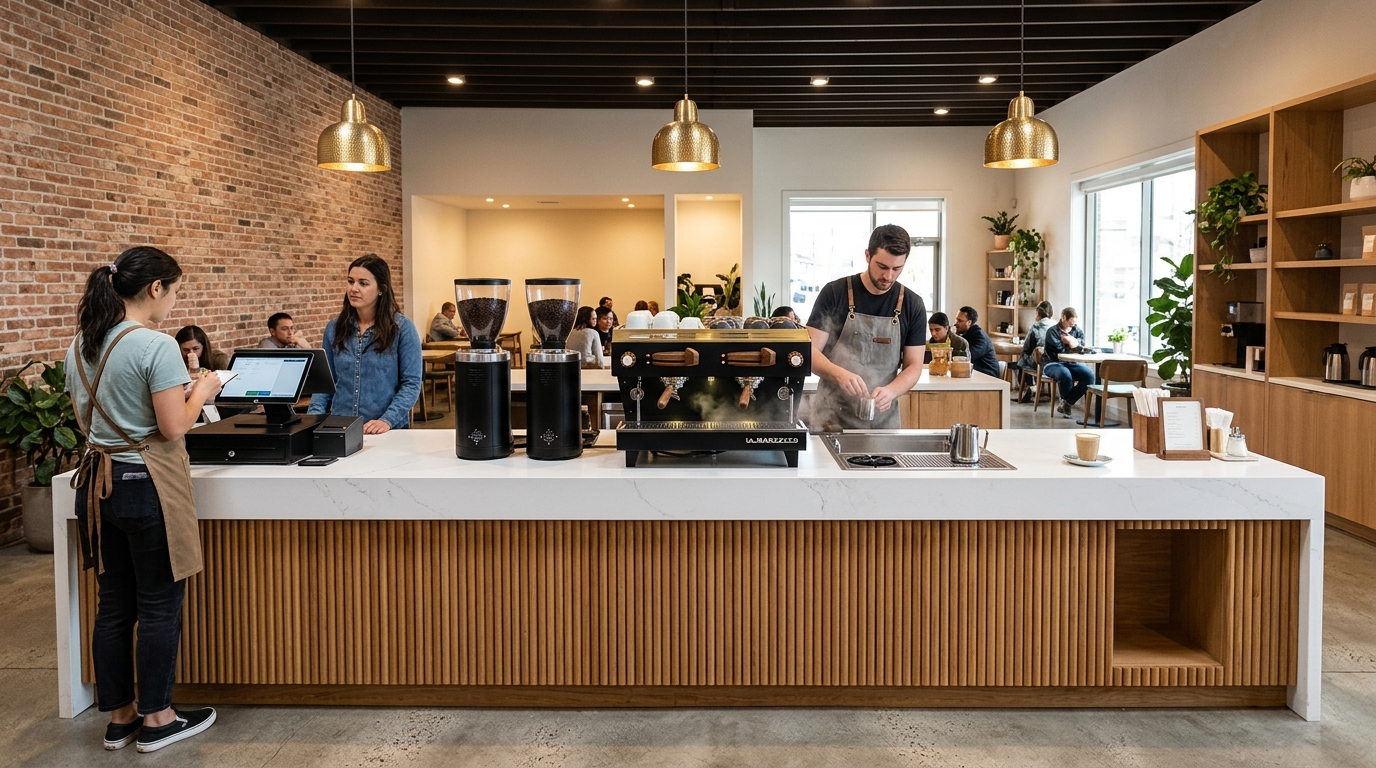
In the quick-service retail beverage industry, speed is not merely a convenience metric—it is the single governing mathematical constraint on gross daily revenue. For a drive-thru coffee operation, customer vehicle queues operate under a merciless physical reality: if a drive-thru queue exceeds six vehicles, car drivers visually abandon the line and drive to a competitor.
A conventional sit-down cafe can tolerate a 3.5-minute wait time because customers are seated inside a welcoming aesthetic environment. In a drive-thru, every 10 seconds of delay at the window reduces customer satisfaction by 12% and directly caps your maximum vehicular throughput during the critical 6:30 AM to 9:00 AM commuter window.
+-------------------------------------------------------------------------+
|                  DRIVE-THRU SPEED-OF-SERVICE EQUATION                   |
+-------------------------------------------------------------------------+
|                                                                         |
|   VEHICULAR THROUGHPUT (Cars/Hour) = 3600 / [ WINDOW CYCLE TIME (s) ]   |
|                                                                         |
|   At 120-second window time :  30 cars/hour  @ $7.50 avg =  $225/hr     |
|   At  60-second window time :  60 cars/hour  @ $7.50 avg =  $450/hr     |
|   At  40-second window time :  90 cars/hour  @ $7.50 avg =  $675/hr     |
|   At  30-second window time : 120 cars/hour  @ $7.50 avg =  $900/hr     |
|                                                                         |
|   Result: Cutting ticket time from 90s to 45s DOUBLES peak morning sales!|
+-------------------------------------------------------------------------+
To achieve sub-45-second service times while maintaining specialty-grade coffee standards, an operator cannot simply tell baristas to “move faster.” Speed of service is an engineering discipline. It requires an ergonomically optimized bar geometry, synchronized kitchen display systems (KDS), automated liquid delivery, and purpose-built high-recovery machinery.
In this comprehensive guide, we dissect the spatial engineering, equipment specifications, line-busting workflows, and technical layouts required to build a high-volume commercial drive-thru coffee engine.
1. Ergonomic Cockpit Architecture: The 180° Zero-Step Production Cell
The fundamental physical rule of high-throughput drive-thru bar design is The Zero-Step Rule: A production barista should never take more than one physical step to complete any primary beverage workflow.
Every step a barista takes across a tile floor requires approximately 0.75 seconds. Over a morning rush of 450 drinks, an inefficient 4-step layout wastes 1,350 seconds (22.5 minutes) of pure transit time—representing 35 lost vehicle transactions.
+-------------------------------------------------------------------------+
|             THE 180° ZERO-STEP DRIVE-THRU PRODUCTION COCKPIT             |
+-------------------------------------------------------------------------+
|                                                                         |
|                          [ PICKUP WINDOW ]                              |
|                                  ^                                      |
|                                  |                                      |
|            +-------------------------------------------+                |
|            |      STAGING & HANDOFF COUNTER            |                |
|            |  [KDS Screen]  [Lid Dispenser] [Straws]   |                |
|            +-------------------------------------------+                |
|                                  ^                                      |
|                                  | (Pivot)                              |
|   [LEFT FLANK]                   |                   [RIGHT FLANK]      |
| +---------------------+   +--------------+    +-----------------------+ |
| | ICE & BLENDER CELL  |   |   BARISTA    |    | HOT ESPRESSO CELL     | |
| | - 50lb Drop-in Well |   |  (STATION)   |    | - 2-Group Volumetric  | |
| | - Vitamix The Quiet |   +--------------+    | - On-Demand Grinder   | |
| |   One Blender       |          | (Pivot)    | - Puqpress Auto-Tamper| |
| | - Flavor Syrup Rail |          v            | - Auto-Steam Wand     | |
| +---------------------+   +-----------------+ +-----------------------+ |
|                           | AUTOMATED MILK  |                           |
|                           | DISPENSING UNIT |                           |
|                           | (Under Counter) |                           |
|                           +-----------------+                           |
|                                                                         |
+-------------------------------------------------------------------------+
The Three Independent Production Cells
- The Hot Espresso Cell: Dedicated strictly to extracting espresso, auto-tamping, and steaming microfoam. The barista pivots 45° to the right, engages the automated tamper, locks the portafilter into a volumetric group, and initiates steaming.
- The Cold Beverage & Ice Cell: In North America, cold beverages account for over 75% of total sales across drive-thru chains. The cold cell must feature a drop-in stainless ice bin with integrated cold plate, dedicated flavor pump rails (pre-calibrated to 0.5oz pumps), and a commercial blender with in-counter acoustic shroud.
- The Center Automation Axis: Located directly beneath or behind the barista, an automated refrigerated milk tap dispenses exact ounces of milk directly into steaming pitchers with a single push of an illuminated button.
2. Espresso Machine Selection: Volumetric Auto-Steam vs Super-Automatic
Choosing the espresso core for a drive-thru requires balancing beverage quality, labor consistency, and throughput speed.
+-------------------------------------------------------------------------------+
|             DRIVE-THRU ESPRESSO PLATFORM COMPARISON MATRIX                    |
+-------------------------------------------------------------------------------+
| Equipment Category              | Representative Models    | Shot Cycle Time | Barista Skill Req. | Peak Volume (Drinks/Hr) |
|---------------------------------+--------------------------+-----------------+--------------------+-------------------------|
| Semi-Automatic Volumetric       | La Marzocco Linea PB     | 35 - 45 Seconds | High (Trained)     | 80 - 100 drinks/hr      |
| with Scales (ABR)               | Synesso MVP Hydra        |                 |                    |                         |
| Volumetric with Auto-Steam      | Nuova Simonelli Aurelia  | 25 - 35 Seconds | Moderate           | 120 - 150 drinks/hr     |
| (Easycream / Autosteam)         | Sanremo Café Racer       |                 |                    |                         |
| Ultra-Premium Super-Automatic   | Eversys Enigma / Shotmaster| 18 - 25 Seconds | Low (Turnkey)      | 180 - 350 drinks/hr     |
| Commercial Platform             | Franke A1000 Flex        |                 |                    |                         |
+-------------------------------------------------------------------------------+
1. Volumetric with Integrated Scales (Auto-Brew Ratio - ABR)
Machines like the La Marzocco Linea PB ABR feature load cells integrated directly into the drip tray. The machine automatically weighs the portafilter, tares the weight, and cuts extraction at an exact mass target (e.g., 36.0g $\pm$ 0.5g).
- Why it matters in a drive-thru: Baristas never stand staring at an extraction or fuss with separate scales. They press the button and instantly turn around to pump syrups or prep cold cups while the machine stops itself.
2. Auto-Steaming Temperature Sensor Wands
Manual milk steaming is the single largest production bottleneck in morning service. Modern drive-thru semi-automatics incorporate electronic auto-steaming wands (such as Nuova Simonelli’s Easycream or La Marzocco’s Autosteam):
- The wand incorporates internal air-injection solenoids and an infrared thermistor at the tip.
- The barista drops the wand into the pitcher, pushes a lever, and walks away.
- The system injects precise volumes of aeration air, initiates a rotational vortex, and automatically shuts steam off the exact millisecond milk reaches 145°F (63°C). The microfoam is indistinguishable from competition-level manual steaming.
3. The Eversys High-Volume Super-Automatic Alternative
For non-specialty high-velocity drive-thrus, commercial modular super-automatics (like the Eversys Enigma E’4m or Shotmaster) eliminate manual tamping and grinding entirely. Operating two independent grinding chambers and dual 1.5-gallon steam boilers, an Eversys machine extracts 4 espresso shots simultaneously and texturizes two pitchers of milk concurrently in 22 seconds, allowing a single operator to produce up to 350 drinks per hour.
3. High-Speed Liquid & Flavor Automation Systems
In a drive-thru where 80% of beverages contain flavor syrups, alternative milks, and cold foam, manual pouring and bottle pumping creates massive latency and sticky counter mess.
+-------------------------------------------------------------------------+
|                  LIQUID INGREDIENT SPEED COMPARISON                     |
+-------------------------------------------------------------------------+
|                                                                         |
|  [MANUAL GALLON JUG & BOTTLE PUMPS]                                     |
|  - Open under-counter door: 2.0s                                        |
|  - Pull gallon jug & unscrew cap: 2.5s                                  |
|  - Pour into measuring jigger: 3.5s                                     |
|  - Return jug to fridge & shut door: 2.0s                               |
|  TOTAL TIME: 10.0 SECONDS                                               |
|                                                                         |
|  [AUTOMATED UNDER-COUNTER DISPENSER]                                    |
|  - Place pitcher under nozzle: 0.5s                                     |
|  - Hit "12oz Oat" button (Dispenses 10oz at 36°F): 1.8s                 |
|  TOTAL TIME: 2.3 SECONDS (77% Time Reduction!)                          |
|                                                                         |
+-------------------------------------------------------------------------+
Key Automated Systems for Drive-Thrus
-
Automated Milk Dosing Taps (e.g., The Juggler / Barista Technology): Draws milk directly from 5-gallon Bag-in-Box (BIB) containers or standard plastic jugs stored in a dedicated under-counter commercial refrigerator. Baristas select from programmable volumes (4oz, 6oz, 8oz, 10oz, 12oz) across multiple milk types (Whole, Non-Fat, Oat, Almond). It eliminates over-pouring waste by 12% to 15% and saves 8 seconds per drink.
-
Bulk Flavor Delivery Systems: Instead of cluttering countertops with 20 glass Torani or Monin bottles, high-volume drive-thrus mount stainless flavor syrup rail manifolds or use bag-in-box pneumatic syrup pumps (Flojet syrup pumps running on compressed air). Flavor lines route to compact dispense heads mounted right next to the cup staging station.
-
In-Counter Pitcher Rinsers with Flow-Thru Drains: Every workstation must feature an NSF-certified recessed stainless pitcher rinser equipped with a spin-spray star actuator. Rinsing a steaming pitcher or blender jar takes exactly 1.5 seconds under high water pressure (40–50 PSI), eliminating sink transit.
4. Kitchen Display Systems (KDS) & Line-Busting Point-of-Sale Hardware
The point-of-sale architecture in a drive-thru must be designed to decouple order entry from payment processing and production queueing.
+-------------------------------------------------------------------------+
|             HIGH-THROUGHPUT DRIVE-THRU KDS & ORDER PIPELINE             |
+-------------------------------------------------------------------------+
|                                                                         |
|   [LINE-BUSTING BARISTAS] (Queue Outside with iPads / Toast Go)         |
|             |                                                           |
|             v (High-Speed Local Wi-Fi Mesh)                             |
|   +-----------------------------------------------------------------+   |
|   |                  CENTRAL POS ROUTER (Offline Sync)              |   |
|   +-----------------------------------------------------------------+   |
|             |                                   |                       |
|             v                                   v                       |
|   +-----------------------+           +-----------------------+         |
|   |  KDS 1: DRINK CELL    |           |  KDS 2: FOOD / WARM   |         |
|   |  - Color-coded tickets|           |  - Rapid-cook oven    |         |
|   |  - Real-time timer    |           |  - Bagging & pastry   |         |
|   |  - Bump bar clearance |           |  - Bump bar clearance |         |
|   +-----------------------+           +-----------------------+         |
|             \                                   /                       |
|              \                                 /                        |
|               v                               v                         |
|   +-----------------------------------------------------------------+   |
|   |                    PICKUP WINDOW CONSOLIDATION                  |   |
|   |             (Order Bagged, Lidded, Handed Out in <15s)          |   |
|   +-----------------------------------------------------------------+   |
|                                                                         |
+-------------------------------------------------------------------------+
1. Handheld Line-Busting (Mobile Order Injection)
During morning peak rushes, stationary menu board speakers become choke points. Leading chains deploy “line-busters”—baristas equipped with ruggedized handheld POS tablets (Toast Go 2, Square Handheld, or Clover Flex) walking down the line of cars.
- Orders are taken 4 to 8 cars back in the queue.
- The order is transmitted via low-latency Wi-Fi to the production KDS instantly.
- By the time the vehicle rolls up to the payment window, their complex iced drinks are already poured, capped, and sitting in cup holders ready for handoff!
2. Kitchen Display System (KDS) Color-Coded Logic
Ditch paper ticket printers. Steam, moisture, and printer paper jams ruin drive-thru velocity. Mount commercial 22-inch waterproof KDS touchscreens (or bump-bar operated screens) directly at eye level above the espresso and blending stations:
- Green (0 to 30 Seconds): Order newly received; barista begins prep.
- Yellow (31 to 45 Seconds): Approaching speed threshold; drink texturing should be complete.
- Red Flashing (>45 Seconds): Bottleneck detected; supervisor steps in to assist.
5. The Critical Equipment Footprint & Utility Specification Sheet
Designing a drive-thru kiosk (often 350 to 800 square feet) requires packing massive commercial machinery into tight square footage without overloading circuits or generating excessive ambient heat.
+-------------------------------------------------------------------------------+
|             DRIVE-THRU COMMERCIAL EQUIPMENT UTILITY SPECIFICATIONS            |
+-------------------------------------------------------------------------------+
| Equipment Description           | Electrical Spec         | Water Requirement | Drain Requirement   | BTU Heat Output |
|---------------------------------+-------------------------+-------------------+---------------------+-----------------|
| 2-Group Volumetric Espresso     | 220V / 30A / 1-Phase    | 3/8" Cold Treated | 3/4" Gravity Drain  | 4,500 BTU/hr    |
| (e.g., La Marzocco Linea PB)    | 4,600 Watts             | 35 - 50 PSI       | High-temp silicone  |                 |
| Dual On-Demand Espresso Grinder | 120V / 15A / 1-Phase    | N/A               | N/A                 | 800 BTU/hr      |
| (Mahlkönig E65S / Mythos)       | 650 Watts each          |                   |                     |                 |
| Twin Commercial Batch Brewer    | 120/208V / 30A / 1-Phase| 3/8" Cold Treated | 1/2" Drain Trough   | 3,800 BTU/hr    |
| (FETCO CBS-2142XTS)             | 5,500 Watts             | 40 - 60 PSI       |                     |                 |
| Under-Counter Ice Machine       | 120V / 20A Dedicated    | 1/2" Cold Water   | 3/4" Dedicated Air- | 6,200 BTU/hr    |
| (Hoshizaki 300-500 lb Cubelet)  | 1,200 Watts             | 30 - 60 PSI       | Gap Floor Drain     |                 |
| Rapid-Cook Impinger Oven        | 208/240V / 30A Dedicated| N/A               | N/A                 | 5,000 BTU/hr    |
| (TurboChef Sota / Merrychef)    | 6,200 Watts             |                   | Ventless Catalyst   |                 |
| Vitamix The Quiet One Blenders  | 120V / 15A (Dual plugs) | N/A (Pitcher      | Recessed Rinser     | 1,500 BTU/hr    |
| (2 Commercial Units)            | 1,800 Watts each        | Rinser fed)       | Drain Basin         |                 |
| Under-Counter Reach-in Fridge   | 115V / 15A Dedicated    | N/A               | Self-evaporating    | 2,200 BTU/hr    |
| (True TUC-48 / Beverage-Air)    | 600 Watts               |                   | condensate pan      |                 |
+-------------------------------------------------------------------------------+
HVAC & Thermal Load Engineering Warning
Notice the cumulative heat dissipation in the table above: over 24,000 BTU/hr of ambient heat pumped into an enclosed 500-sq-ft drive-thru building from espresso boilers, batch brewers, refrigeration compressors, and high-speed ovens.
If you install a standard residential 2-ton HVAC unit, the kiosk interior will reach 95°F (35°C) in July. This causes refrigeration compressors to short-cycle and fail, grinder burr carriers to expand thermally (destroying espresso recipes), and baristas to suffer severe heat exhaustion. Commercial drive-thrus require a minimum 4-ton to 5-ton commercial HVAC split system with active dedicated exhaust hoods positioned over batch brewers and rapid-cook ovens.
6. Cold Beverage & Rapid Ice Architecture
In modern North American drive-thrus, iced coffee, cold brew, refreshers, energy spritzers, and blended frappes dominate transaction volume. If your ice system runs dry, your drive-thru is paralyzed.
+-------------------------------------------------------------------------+
|                  DRIVE-THRU ICE & COLD CHAIN ARTERY                    |
+-------------------------------------------------------------------------+
|                                                                         |
|  [CENTRAL BULK ICE MAKER (Back of House / Utility Room)]               |
|  - 600 - 800 lb/day Nugget / Cubelet Ice Machine                        |
|  - Dedicated remote air-cooled condenser on roof                        |
|                                |                                        |
|                                v (Ice Caddy Transit)                    |
|  +------------------------------------------------------------------+   |
|  |             FRONT-LINE SPEED DROP-IN ICE BINS (x2)               |   |
|  | - 65-lb insulated stainless drop-in well with sliding lid        |   |
|  | - Integrated 8-circuit internal cold plate                       |   |
|  | - Cold plate chills soda lines, syrup BIBs, and keg lines        |   |
|  | - Sloped bottom to dedicated gravity drain                       |   |
|  +------------------------------------------------------------------+   |
|                                |                                        |
|                                v                                        |
|  [RAPID SCOOPING ACCESS] -> 1.5-Second Ice Fill per 24oz Cup            |
|                                                                         |
+-------------------------------------------------------------------------+
Chewblet / Nugget Ice vs Standard Cubes
Specialty drive-thrus have largely migrated from standard gourmet cubes to Chewblet (Nugget / Pebble) ice (manufactured by Follett or Scotsman):
- Customer Preference: Consumers overwhelmingly rate nugget ice higher for iced espresso and flavor drinks, driving social media engagement and repeat visits.
- Blending Velocity: Nugget ice shatters instantly inside commercial blenders, cutting frappe blend cycles from 25 seconds down to 14 seconds and extending blender blade and drive-socket lifespan by 300%.
- Chilling Speed: The dramatically increased surface area chills hot espresso shots poured over ice almost instantaneously, preventing watery dilution.
7. The 45-Second Drive-Thru Speed-of-Service Checklist
+-------------------------------------------------------------------------+
|             PRE-OPENING DRIVE-THRU VELOCITY AUDIT CHECKLIST             |
+-------------------------------------------------------------------------+
| [ ] 1. Zero-Step Ergonomics: Can baristas reach ice, syrups, espresso,  |
|        and milk without taking more than one lateral step?              |
| [ ] 2. Milk Automation: Are bulk milks dispensed electronically from    |
|        chilled reservoirs directly into steaming pitchers?              |
| [ ] 3. Auto-Tamping: Is an electronic automatic tamper (Puqpress)       |
|        mounted directly under the main espresso grinder?                |
| [ ] 4. Auto-Steaming Wands: Are secondary steam wands calibrated to     |
|        shut off automatically at exactly 145°F (63°C)?                  |
| [ ] 5. Kitchen Display Systems: Are high-visibility KDS screens mounted |
|        at eye level with bump-bars and automated color warnings?        |
| [ ] 6. Line-Busting Mobile POS: Are two fully charged handheld tablets  |
|        ready for roaming outdoor order injection during rush hours?     |
| [ ] 7. Dedicated Ice Reservoir: Does the front line hold a minimum of   |
|        60 lbs of accessible nugget ice per production station?          |
| [ ] 8. HVAC & Ventilation: Does the air conditioning system have at     |
|        least 4 tons of commercial cooling capacity with exhaust hoods?  |
+-------------------------------------------------------------------------+
By engineering your drive-thru as an integrated, automated manufacturing cell rather than an improvised coffee counter, you eliminate every physical micro-delay in the beverage creation cycle. The result is a frictionless, high-velocity operation capable of processing 80 to 120 cars per hour, maximizing morning revenue, and dominating the local quick-service coffee market.
Frequently Asked Technical Questions
What is the industry benchmark ticket time for a high-volume coffee drive-thru?
The gold-standard benchmark for specialty coffee drive-thru ticket time is between 45 and 60 seconds from order completion at the speaker to handing the beverage out the pickup window. Top-tier operators (like Dutch Bros and 7 Brew) regularly achieve 30 to 45 seconds during morning rush hours through line-busting handheld tablets, pre-batched flavor syrups, push-button volumetric dosing, and automated milk dispensing.
Should a commercial drive-thru use super-automatic or traditional volumetric espresso machines?
High-volume drive-thrus pulling 600 to 1,500 drinks per day typically select either top-tier semi-automated volumetric machines with auto-steaming wands (e.g., La Marzocco Linea PB with Auto-Brew Ratio, Nuova Simonelli Aurelia Wave with Easycream) or ultra-high-capacity premium super-automatics (e.g., Eversys Cameo or Franke A1000). Semi-automatics maintain artisan specialty branding, while super-automatics deliver bulletproof recipe consistency and sub-35-second shot cycles regardless of barista skill level.
How does an automated milk dispensing system increase drive-thru speed?
Automated refrigerated milk dispensers (such as Juggler, Barista Technology, or SureShot) hold 5-gallon bag-in-box or bulk jugs under the counter at a constant 36°F (2°C). Baristas place a pitcher beneath an electronic nozzle and press a button to dispense exact, pre-measured quantities (e.g., 6oz, 10oz, 14oz) of whole, skim, or oat milk in under 2 seconds, eliminating the physical motion of bending down to reach refrigerator doors, unscrewing plastic jugs, and manual liquid measuring.
Why is a dual-window drive-thru layout faster than a single-window design?
A dual-window layout separates payment collection (Window 1) from beverage staging and handoff (Window 2), eliminating the transaction bottleneck. While the cashier at Window 1 processes credit cards, mobile apps, or cash, the production baristas behind Window 2 have an extra 30 to 45 seconds of buffer time to finish steaming milk and assembling complicated iced beverages, keeping the queue moving continuously without car stacking.
What electrical service is required for a commercial drive-thru coffee building?
A modern commercial drive-thru coffee kiosk requires a minimum 200-Amp, 120/208V or 120/240V 3-phase electrical service panel (with 400-Amp recommended if utilizing multiple commercial espresso machines, rapid-cook impinger ovens, commercial ice makers, and walk-in refrigeration). Dedicated 30A and 50A 220V circuits are mandatory for commercial espresso machines and water filtration booster pumps.