Automated Milk Dispensing Systems: Ubermilk vs. KegDrop (2026)
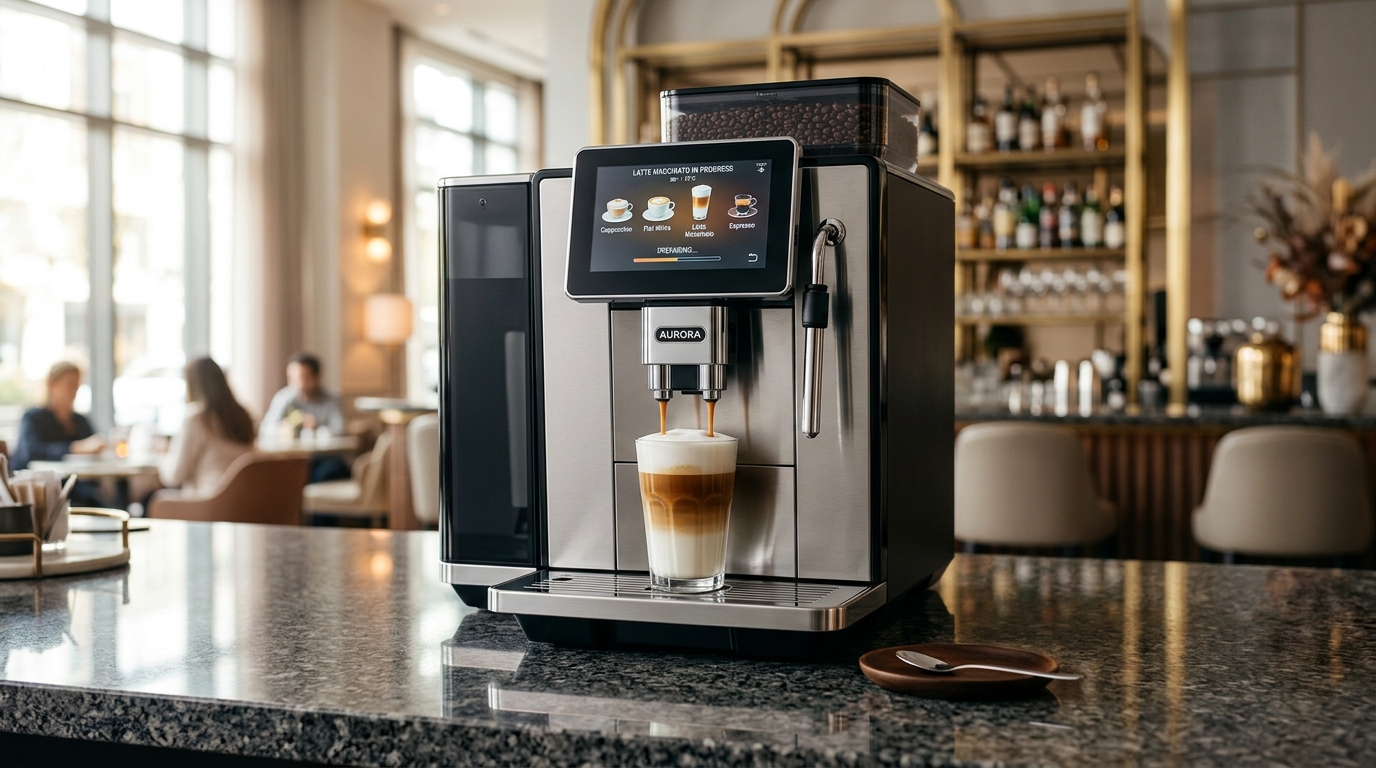
In the specialty coffee industry, cafe owners spend enormous energy obsessing over the weight of ground coffee: weighing 18.0 grams of dry espresso grounds down to the tenth of a gram, calibrating grinder burrs, and timing extractions to the second.
Yet the moment that espresso shot is pulled, that same precision is abandoned when it comes to the most expensive ingredient in the building: milk.
Watch a busy barista during an 8:00 AM rush: they grab a plastic gallon jug of whole milk, pour an unmeasured splash into a 20-ounce pitcher, steam it, pour a 12-ounce latte, and dump the remaining 4 ounces of hot, leftover milk straight down the rinser drain.
Multiply that four-ounce waste across 400 drinks per day, and a typical coffee shop literally pours $5,000 to $8,000 in raw dairy profits down the drain every single year.
Furthermore, bending down into an under-counter refrigerator, unscrewing plastic caps, lifting 8-pound gallon jugs, and holding a steaming pitcher for 30 seconds across 400 drinks per shift is the leading cause of barista repetitive strain injuries (RSI), wrist tendonitis, and shoulder burnout.
To solve this operational crisis, high-volume commercial cafes in 2026 are deploying Automated Milk Dispensing and Microfoam Systems.
This technical engineering guide evaluates the physics of automated microfoam generation, bulk bag-in-box refrigeration, Clean-in-Place (CIP) sanitation protocols, and delivers an authoritative head-to-head comparison of Ubermilk, Latte Art Factory, and KegDrop.
1. The Financial Reality: Auditing Cafe Dairy Waste & Labor Inefficiency
Before evaluating automated hardware, coffee shop owners must analyze the hidden financial hemorrhage of manual gallon-jug milk service:
+--------------------------------------------------------------------------+
|                  THE COST OF MANUAL MILK JUG SERVICE (ANNUAL)            |
|                                                                          |
|   BASELINE METRICS: Busy Cafe Serving 350 Milk Drinks / Day              |
|   - Daily Milk Consumption: Approx. 22 Gallons / Day                     |
|   - Average Cost per Gallon (Organic / Barista Oat): $4.25 / Gallon      |
|   - Annual Milk Expenditure: $34,127 per year                            |
|                                                                          |
|   THE WASTE DRAIN AUDIT:                                                 |
|   - Pitcher Over-Pour Residue (Drying in jug / dumped): 14.5%            |
|   - Bottom-of-Jug Clings & Accidental Spillage: 1.5%                    |
|   - TOTAL DAIRY WASTE: 16.0% OF ALL PURCHASED MILK                       |
|   - ANNUAL CASH THROWN DOWN THE DRAIN: $5,460 / YEAR                     |
|                                                                          |
|   THE LABOR BOTTLENECK AUDIT:                                            |
|   - Manual Task: Bend down, open fridge, pull jug, twist cap, pour,      |
|     replace cap, return jug, close fridge, steam manually: 38 Seconds.   |
|   - Automated Task: Tap touchscreen icon; microfoam dispenses: 4 Seconds.|
|   - TIME SAVED PER DRINK: 34 SECONDS OF LABOR                            |
|   - Over 350 drinks/day = 3.3 HOURS OF SAVED BARISTA LABOR PER DAY!      |
+--------------------------------------------------------------------------+
By eliminating over-pouring, milk waste drops from 16% down to less than 1.5%.
When combined with three hours of reclaimed labor per day that can be redirected toward customer hospitality or higher order throughput, an automated milk machine represents one of the highest-ROI equipment investments in the industry.
2. Two Distinct Automated Paradigms: Microfoam Texturing vs. Liquid Portioning
When evaluating automated milk systems, cafe owners must choose between two fundamentally different engineering approaches:
+--------------------------------------------------------------------------+
|                  THE TWO AUTOMATED MILK HARDWARE PARADIGMS               |
|                                                                          |
|   PARADIGM 1: COMPLETE AUTOMATED MICROFOAM SYSTEMS                       |
|   (e.g., Ubermilk Pro / Latte Art Factory / Perfect Moose)               |
|   - What it does: Draws cold milk, injects micro-air, flash-heats, and   |
|     dispenses HOT, READY-TO-POUR LATTE ART MICROFOAM in 4 seconds.       |
|   - Barista Action: Simply takes the pitcher and pours latte art.        |
|   - Steam Wand Usage: Zero steam wand usage on the espresso machine.     |
|   - Target Venue: High-volume cafes, airports, corporate headquarters.   |
|                                                                          |
|   PARADIGM 2: BULK LIQUID MILK PORTIONING SYSTEMS                        |
|   (e.g., KegDrop / The Juggler by Six Degrees Automation)                |
|   - What it does: Draws cold milk from bulk 5-gallon bladders or kegs;   |
|     dispenses EXACT LIQUID VOLUME (un-steamed) into the pitcher.         |
|   - Barista Action: Places pitcher under font, gets exact 8oz dose in    |
|     2 seconds, then steams manually on the espresso machine wand.        |
|   - Steam Wand Usage: Traditional barista steaming maintained.           |
|   - Target Venue: Craft specialty cafes that want to preserve artisan    |
|     steaming theater while eliminating gallon jugs and measuring waste.  |
+--------------------------------------------------------------------------+
3. Deep Dive: Ubermilk Pro (The Microfoam Speed Pioneer)
Engineered in Germany, the Ubermilk is the global pioneer that proved automated milk texturing could match—and frequently exceed—the microfoam consistency of World Barista Championship competitors.
+--------------------------------------------------------------------------+
|                  UBERMILK PRO INTERNAL THERMAL & AIR SCHEMATIC           |
|                                                                          |
|   [COLD MILK STORAGE: Built-in 38°F Refrigerated Reservoir or Draw-Tube] |
|          |                                                               |
|          v                                                               |
|   [PRECISION VARIABLE PERISTALTIC PUMP]                                  |
|          |                                                               |
|          v                                                               |
|   [COMPRESSED MICRO-AIR INJECTION VENTURI NOZZLE]                        |
|   - Digital valve pulses micro-filtered air into cold milk stream.       |
|   - Regulates air bubble volume down to 50 microns.                      |
|          |                                                               |
|          v                                                               |
|   [RAPID THERMAL HEATING BLOCK (Zero Steam Contact)]                     |
|   - Milk travels through low-friction stainless spiral heating block.    |
|   - Whey proteins denature instantly, coating micro-air bubbles.         |
|   - Temperature sensor maintains programmed temp (+/- 0.5°F).            |
|          |                                                               |
|          v                                                               |
|   [DISPENSE NOZZLE: SILKY POURABLE MICROFOAM IN 3.5 SECONDS]             |
+--------------------------------------------------------------------------+
Key Engineering Advantages of the Ubermilk Pro:
- Zero Dilution from Steam: Traditional espresso machine steam wands inject boiling water vapor (condensed steam) directly into the milk, diluting the drink by 8% to 12% with added water. The Ubermilk heats milk through external thermodynamic contact without injecting steam, preserving 100% of the rich, natural dairy sugars and fats, producing a noticeably sweeter, creamier latte.
- Push-Button Programmable Temperatures & Foam Densities: Baristas can program independent presets on the touchscreen:
- Button 1: 140°F Dense Cappuccino Foam.
- Button 2: 145°F Silky Flat White Microfoam.
- Button 3: 155°F Extra-Hot Latte Foam.
- Speed of Service: Dispenses 8 ounces of finished, heated, textured microfoam in just 3.5 seconds. During peak morning rushes, a single barista can pour 150 handcrafted latte art drinks per hour without ever touching a steam wand.
The Downside of Ubermilk:
- Single-Milk Limitation: Most standard Ubermilk units can connect to only one milk source at a time (typically whole milk). To dispense oat milk, the cafe must either purchase a second Ubermilk unit or steam oat milk manually on the espresso machine.
4. Deep Dive: Latte Art Factory (The Multi-Milk Multi-Temp Titan)
Manufactured in Germany by Frank Bunzel, the Latte Art Factory (LAF Bar Pro) represents the next evolution in automated milk dispensing, engineered explicitly to handle the explosive rise of plant-based milks and cold foam.
Key Engineering Advantages of the Latte Art Factory:
- Multi-Milk Capability (Dual or Quad Suction Lines): The LAF Bar Pro can connect to up to four independent milk sources simultaneously (e.g., Whole Milk, Oat Milk, Almond Milk, and Non-Fat Dairy) through separate sanitary fluid pathways, completely preventing cross-contamination and milk allergen cross-contact.
- Cold Foam Generation: Unlike other systems that can only heat milk, the LAF can dispense thick, velvety cold foam at 38°F without adding heat. With cold brew and iced beverages representing over 70% of modern cafe sales, the ability to top iced drinks with flavored cold foam in two seconds is an immense revenue driver. Review our Commercial Cold Brew & Nitro Draft Guide to see how cold foam pairs with nitro draft systems.
- Under-Counter or Countertop Architecture: The LAF offers modular configurations where the refrigeration unit sits under the counter while a sleek dispensing font sits above the bar, saving valuable workspace.
5. Deep Dive: KegDrop / The Juggler (The Bulk Liquid Dispenser)
For specialty cafes that pride themselves on the artisan craft of hand-steaming milk on the espresso wand but want to eliminate plastic jug clutter and dairy waste, KegDrop and The Juggler provide the ultimate bulk liquid portioning platform.
+--------------------------------------------------------------------------+
|                  KEGDROP BULK LIQUID MILK WORKFLOW                       |
|                                                                          |
|   1. BULK DAIRY STORAGE:                                                 |
|      - Milk is delivered in commercial 5-Gallon (20L) Bag-in-Box (BIB)   |
|        bladders or 5-gallon stainless steel kegs.                        |
|      - Stored inside an under-counter refrigerated draught cooler.       |
|                                                                          |
|   2. OPTICAL PITCHER SENSING:                                            |
|      - Barista places a pitcher on the drip tray beneath the font.       |
|      - Optical sensors read the pitcher size and auto-tare.              |
|      - Dispenses EXACT target volume (e.g., exactly 220 mL) in 2 seconds.|
|                                                                          |
|   3. ARTISAN HAND STEAMING:                                              |
|      - Barista steams the perfectly measured cold milk on the wand.      |
|      - Because the dose was exact, pitcher leftover waste is ZERO.       |
|      - Eliminates opening/crushing 30 plastic gallon jugs per day!       |
+--------------------------------------------------------------------------+
Key Engineering Advantages of KegDrop:
- Bulk Dairy Price Discounts: Sourcing commercial milk in 5-gallon Bag-in-Box (BIB) bladders or stainless returnable kegs reduces raw milk purchasing costs by 10% to 15% compared to retail gallon plastic jugs, while eliminating thousands of single-use plastic jugs from regional landfills.
- Craft Theater Intact: Customers still see the barista steaming milk on the beautiful steam wand of your La Marzocco Linea PB or Synesso S200.
6. Head-to-Head Specification Matrix: Automated Milk Platforms
| Performance Metric | Ubermilk Pro | Latte Art Factory (LAF Bar Pro) | KegDrop / The Juggler System |
|---|---|---|---|
| Primary Function | Automated Microfoam Texturing | Automated Hot & Cold Microfoam | Cold Liquid Portion Dispenser |
| Milk Types Supported | 1 Milk Line (Standard) | Up to 4 Milks Simultaneously | Up to 4 Milks (Multi-Tap) |
| Dispense Speed | 3.5 Seconds (8oz Microfoam) | 3.5 Seconds (Hot or Cold) | 2.0 Seconds (Liquid Dose) |
| Cold Foam Capable? | No (Hot Texturing Only) | YES (Patented Cold Microfoam) | No (Dispenses Cold Liquid Only) |
| Steam Wand Required? | No (Zero steam wand usage) | No (Zero steam wand usage) | Yes (Barista steams on wand) |
| Sanitation Protocol | Automated CIP (10-min cycle) | Automated CIP (15-min cycle) | Automated Line Flush Cycle |
| Food Safety Rating | NSF-20 / CE Certified | NSF-20 / UL / CE Certified | NSF Certified Commercial Food |
| Physical Location | Countertop Unit | Countertop or Sub-Counter Split | Under-Counter Cooler + Taps |
| Electrical Requirement | 208V – 240V / 1-Phase (2,800W) | 208V – 240V / 1-Phase (3,000W) | 115V / 60Hz / 1-Phase (300W) |
| Typical Equipment Cost | $9,500 – $11,500 (New) | $11,500 – $14,000 (New) | $7,500 – $10,500 (Complete) |
7. Clean-in-Place (CIP) Food Safety Protocols: Daily Maintenance
Because liquid milk spoils rapidly at room temperature, automated milk machines must follow strict automated Clean-in-Place (CIP) chemical protocols to prevent toxic bacterial biofilms:
+--------------------------------------------------------------------------+
|                  DAILY AUTOMATED MILK SYSTEM CIP PROTOCOL                |
|                                                                          |
|   FREQUENCY: EVERY NIGHT AT CLOSING (NON-NEGOTIABLE)                     |
|   LABOR TIME: 5 MINUTES TO INITIATE (RUNS AUTONOMOUSLY)                  |
|                                                                          |
|   STEP 1: MILK ISOLATION                                                 |
|   - Remove milk intake suction probes from milk bags/coolers.            |
|   - Wipe exterior probe shafts with sanitized alcohol wipe.              |
|                                                                          |
|   STEP 2: CHEMICAL WASH CYCLE INITIATION                                 |
|   - Submerge intake probes into container of warm water mixed with       |
|     specialized alkaline milk line detergent (Urnex Rinza / Cafiza Milk).|
|   - Press "Daily Clean" button on the digital touchscreen.               |
|                                                                          |
|   STEP 3: AUTOMATED INTERNAL SCRUB                                       |
|   - The machine automatically pulses the chemical solution through       |
|     pumps, aeration nozzles, and heating coils for 8 minutes, dissolving |
|     milk fats and protein films.                                         |
|                                                                          |
|   STEP 4: COLD WATER PURGE                                               |
|   - Machine alerts operator to transfer probes into clean fresh water.   |
|   - Flushes 2.0 liters of fresh water through lines to remove all acid.  |
|   - System enters overnight clean standby mode.                          |
+--------------------------------------------------------------------------+
Review our dedicated maintenance and sanitation guides:
- Commercial Coffee Equipment Maintenance & Water Quality
- How to Open a Coffee Shop: Comprehensive Equipment Checklist
8. The Final Verdict: Which Milk Automation System Fits Your Bar?
Invest in the Ubermilk Pro if:
- You operate a high-volume specialty cafe pulling 300+ milk drinks per day where speed-of-service and latte art consistency during peak rush are your absolute highest priorities.
- You want to eliminate 15% dairy waste and reduce barista repetitive strain injuries.
- You primarily use one high-volume milk type (e.g., whole dairy milk) on your primary bar.
Invest in the Latte Art Factory (LAF Bar Pro) if:
- You operate a modern cafe where oat, almond, and alternative plant-based milks represent over 40% of sales, demanding multi-milk isolation without allergen cross-contact.
- You want to dominate the lucrative iced beverage market by offering premium textured cold foam on cold brews and iced lattes.
- You have the budget for a top-tier $12,000+ complete automation station.
Invest in KegDrop / The Juggler if:
- You want to maintain the traditional artisan theater of hand-steaming milk on your espresso machine steam wands.
- You want to eliminate thousands of plastic gallon jugs by switching to cost-effective 5-gallon Bag-in-Box dairy delivery.
- You want zero pitcher over-pour waste without changing how your baristas steam and pour. Review our Startup Equipment Budget Guide to structure equipment leasing.
Frequently Asked Technical Questions
How much milk does an average specialty coffee shop waste every day?
Industry operational audits reveal that the average commercial coffee shop wastes between 12% and 20% of its purchased milk volume. This waste is caused by baristas overfilling pitchers by 2 to 4 ounces per drink to ensure adequate steam wand whirlpool vortexing, dumping unsteamed leftover milk into the drip tray, and throwing out spoiled opened plastic gallon jugs.
How does an automated microfoam machine like the Ubermilk create textured milk?
The Ubermilk does not use a traditional steam boiler. Instead, an internal peristaltic pump draws cold liquid milk through an precision aeration chamber where compressed micro-filtered air is injected into the milk stream. The aerated milk then passes through a rapid, low-friction heating block, denaturing whey proteins and creating ultra-glossy, pourable liquid velvet microfoam in under 4 seconds at the exact programmed temperature.
What is the difference between an Ubermilk and a liquid milk dispenser like KegDrop?
The Ubermilk is a complete microfoam texturing system that dispenses hot, fully frothed, ready-to-pour microfoam directly into a pitcher. The KegDrop (or The Juggler) is a cold liquid portioning system that draws milk from bulk 5-gallon bag-in-box (BIB) containers or kegs, dispensing exact un-steamed liquid doses (e.g., 6.0oz for a flat white, 10.0oz for a latte) into a pitcher, which the barista then steams manually on the espresso machine wand.
How are automated milk machines sanitized to prevent bacterial contamination?
Automated milk systems utilize automated Clean-in-Place (CIP) sanitization cycles. At the end of every operating day, the barista places a suction line into an alkaline milk line cleaning solution (such as Urnex Rinza). The machine automatically cycles hot chemical wash, scrub, and cold water flushes through every valve, nozzle, and tube, satisfying strict NSF-20 commercial food safety standards.
How fast does an automated milk system pay for itself in a commercial cafe?
In a cafe serving 300 milk-based beverages per day, an automated milk system that eliminates 15% milk waste and saves 15 seconds of barista labor per drink generates roughly $6,500 in annual dairy savings and over $12,000 in labor efficiency. A system costing $9,000 to $12,000 typically achieves 100% complete return on investment (ROI) within 7 to 10 months of commercial operation.