Commercial Under-Counter Refrigeration for Cafes (2026)
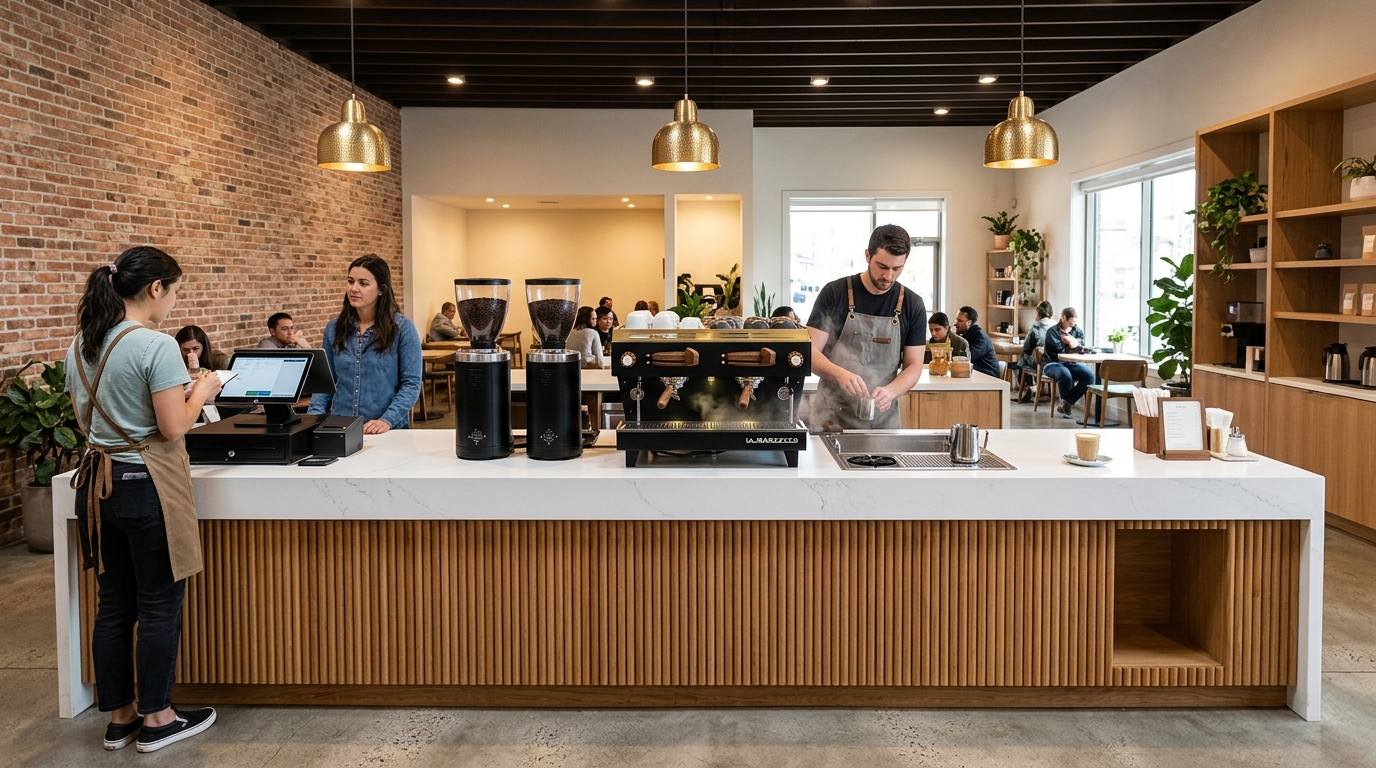
In the fast-paced choreography of a specialty commercial coffee shop, baristas and owners spend endless hours debating espresso machine pressure profiles, burr geometries, and water mineralization.
Yet the single machine that baristas physically touch more than any other piece of hardware on the bar—apart from the portafilter—is the commercial under-counter refrigerator.
Over 80% of all beverages ordered in North American cafes contain dairy or plant-based milks: lattes, cappuccinos, flat whites, iced macchiatos, and cold brew with sweet cream.
During a standard four-hour morning commuter rush, the under-counter refrigerator door is opened and closed between 200 and 400 times.
If your refrigeration unit lacks the commercial cooling power to recover instantly, your milk temperature will climb above 41°F (5°C).
The consequences are immediate: dairy milk develops sour off-flavors, plant-based oat milks separate and curdle upon contact with hot espresso, and municipal health inspectors will write a critical NSF-7 temperature violation that can shut down your cafe.
Furthermore, if your contractor mistakenly installs a domestic mini-fridge or a rear-breathing commercial cooler inside tight, custom cabinetry, the compressor will suffocate in its own heat, burning out within six months.
This comprehensive technical guide breaks down compressor thermodynamics, front-breathing cabinet integration, NSF-7 food safety standards, and evaluates the three titans of commercial foodservice refrigeration: True Manufacturing, Beverage-Air, and Turbo Air in 2026.
1. Commercial Food Safety & NSF-7: The Law of Dairy Temperature
Under United States FDA Food Code and Canadian Health Standards, liquid dairy milk (and plant-based milk formulated for commercial food service) is classified as a Time/Temperature Control for Safety (TCS) food.
+--------------------------------------------------------------------------+
|                  THE FOOD SAFETY TEMPERATURE DANGER ZONE                 |
|                                                                          |
|   CRITICAL TEMPERATURE SPECTRUM:                                         |
|                                                                          |
|   > 41°F (5.0°C)       THE DANGER ZONE (RAPID BACTERIAL PROLIFERATION)   |
|                        - Spoilage bacteria (Pseudomonas) multiply.       |
|                        - Pathogens (Listeria, Salmonella) reproduce.     |
|                        - HEALTH DEPARTMENT IMMEDIATE CITATION / RED TAG  |
|                                                                          |
|   36°F – 38°F          THE COMMERCIAL SAFE SWEET SPOT                    |
|   (2.2°C – 3.3°C)      - Milk is crisp, sweet, and chemically stable.    |
|                        - Proteins (casein & whey) remain un-degraded.    |
|                        - Microfoam texturing quality is at its peak.     |
|                                                                          |
|   < 32°F (0.0°C)       THE FREEZING HAZARD                               |
|                        - Water in milk crystallizes into ice slush.      |
|                        - Destroys milk emulsion; fats separate.          |
|                        - Steam wands produce thin, watery foam.          |
+--------------------------------------------------------------------------+
The NSF-7 Commercial Standard Defined:
To obtain an NSF/ANSI Standard 7 rating, a refrigerator must prove in an independent laboratory that:
- It can maintain internal food temperatures between 36°F and 38°F while operating in a room heated to 100°F (38°C) with 55% relative humidity.
- It can recover to safe temperatures within 3 minutes after doors are held open for 60 seconds.
- Interior walls are sanitary, coved (rounded corners for easy wipe-down), non-porous, and resistant to corrosive lactic acid spills.
[!WARNING] Never install a residential mini-fridge or beverage cooler beneath your commercial espresso bar! Residential fridges lack the compressor horsepower to survive commercial door openings. In the United States and Canada, operating non-NSF certified refrigeration for dairy storage is an automatic critical health violation that will fail your pre-opening health inspection.
2. Compressor Thermodynamics: Front-Breathing vs. Rear-Breathing Engineering
The single most common mistake in coffee shop architectural buildouts is failing to specify Front-Breathing (Front-Venting) refrigeration:
+--------------------------------------------------------------------------+
|                  REAR-BREATHING VS. FRONT-BREATHING AIRFLOW              |
|                                                                          |
|   CASE A: REAR-BREATHING COOLER (TRAPPED INSIDE BUILT-IN CABINETRY)      |
|   +------------------------------------------------------------------+   |
|   |  COUNTERTOP SLAB                                                 |   |
|   |  +--------------------+                                          |   |
|   |  | COOLER CHASSIS     |  Condenser fan blows heat out the BACK:  |   |
|   |  |                    |  ======> HOT EXHAUST TRAPPED! ======>    |   |
|   |  |                    |  Heat recirculates; cabinet hits 130°F!  |   |
|   |  +--------------------+                                          |   |
|   |  RESULT: Compressor overheats, trips high-limit, BURNS OUT.      |   |
|   +------------------------------------------------------------------+   |
|                                                                          |
|   CASE B: FRONT-BREATHING COMMERCIAL COOLER (ZERO CLEARANCE DESIGN)      |
|   +------------------------------------------------------------------+   |
|   |  COUNTERTOP SLAB (Seamless zero-clearance tight cabinet fit)     |   |
|   |  +--------------------+                                          |   |
|   |  | COOLER CHASSIS     |                                          |   |
|   |  |                    |  Front Lower Louver Grille:              |   |
|   |  |                    |  <==== INTAKE: Cool floor-level air      |   |
|   |  |                    |  ====> EXHAUST: Hot air vented to aisle  |   |
|   |  +--------------------+                                          |   |
|   |  RESULT: 100% Thermal stability; zero side/rear clearance needed.|   |
|   +------------------------------------------------------------------+   |
+--------------------------------------------------------------------------+
The Zero-Clearance Advantage:
Front-breathing refrigeration units (such as the True TUC-48 or Beverage-Air UCR48A) pull ambient air from the room across the bottom-left half of the front louver and exhaust hot air across the bottom-right half.
This allows your millwork contractor to build countertops and side cabinetry that sit completely flush against the refrigerator on the left, right, top, and back, creating a seamless, hygienic front-bar appearance with zero wasted space. Review our Coffee Shop Bar Layout and Ergonomic Design Guide for dimensional clearances.
3. Head-to-Head Specification Matrix: Flagship Commercial Under-Counter Coolers
The following matrix compares 48-inch two-door under-counter refrigerators, the industry-standard size positioned directly beneath commercial espresso bars:
| Technical Parameter | True Manufacturing TUC-48-HC | Beverage-Air UCR48AHC | Turbo Air PUR-48-N |
|---|---|---|---|
| Manufacturing Origin | O’Fallon, Missouri, USA | Brookville, Pennsylvania, USA | Long Beach, California / South Korea |
| Cabinet Width | 48.38 inches (122.9 cm) | 48.0 inches (121.9 cm) | 48.25 inches (122.5 cm) |
| Cabinet Depth | 30.12 inches (76.5 cm) | 32.0 inches (81.3 cm) | 30.0 inches (76.2 cm) |
| Counter Working Height | 36.0” (Standard with casters) | 36.0” (Standard with casters) | 35.6” (Standard with casters) |
| Storage Usable Volume | 12.0 Cubic Feet (340 Liters) | 11.8 Cubic Feet (334 Liters) | 12.2 Cubic Feet (345 Liters) |
| Milk Gallon Capacity | 28 to 32 One-Gallon Jugs | 24 to 28 One-Gallon Jugs | 26 to 30 One-Gallon Jugs |
| Cabinet Airflow Design | 100% True Front-Breathing | 100% True Front-Breathing | 100% True Front-Breathing |
| Refrigerant Gas | R290 Hydrocarbon (Eco-Safe) | R290 Hydrocarbon (Eco-Safe) | R290 Hydrocarbon (Eco-Safe) |
| Compressor Horsepower | 1/5 HP (High-Torque) | 1/6 HP | 1/5 HP |
| Electrical Power Draw | 115V / 60Hz / 1-Phase (2.0 A) | 115V / 60Hz / 1-Phase (2.0 A) | 115V / 60Hz / 1-Phase (2.5 A) |
| Self-Cleaning Condenser? | Reverse Condensing Fan (RCU) | Standard Maintenance | Patented Self-Cleaning Mesh |
| Door Construction | Heavy 300-Series Stainless | Heavy Stainless Steel | Heavy Stainless Steel |
| Interior Construction | NSF Approved Clear Aluminum | Corrosion-Resistant Aluminum | Stainless Steel Floor + Aluminum |
| Warranty Coverage | 3-Year Parts/Labor + 5-Yr Comp | 3-Year Parts/Labor + 5-Yr Comp | 3-Year Parts/Labor + 5-Yr Comp |
| Typical Equipment Cost | $2,400 – $2,800 (New) | $2,200 – $2,600 (New) | $1,950 – $2,350 (New) |
4. Deep Dive: True Manufacturing TUC-48-HC (The Commercial Gold Standard)
Manufactured in Missouri, True Manufacturing is the undisputed king of commercial refrigeration in North America. Walk into any high-end specialty roastery, hospital, or Michelin-starred kitchen, and you will see True’s iconic script logo.
Key Engineering Advantages of True:
- Oversized Evaporator and Condenser Coils: True does not buy off-the-shelf minimal refrigeration assemblies; they engineer oversized coils and high-horsepower fan motors. In independent testing, when a TUC-48 door is held open for 60 seconds during an 85°F summer heatwave, the interior temperature recovers below 38°F within 42 seconds of closing.
- Reverse Condensing Fan Motor (RCU): Every time the compressor engages, the condensing fan motor reverses direction for 20 seconds, blowing dust, dirt, and coffee grounds off the condenser coil. This prevents lint buildup, reduces electrical consumption, and dramatically extends compressor lifespan.
- Heavy-Gauge 300-Series Stainless Steel: True uses heavy-gauge magnetic stainless steel on the exterior face and doors, resisting dents and dings from heavy milk crates and accidental portafilter strikes.
- Resale Value: True units retain 50% to 65% of their value after five years of commercial operation, representing the highest liquidity in foodservice refrigeration.
The Downside of True:
- Price Premium: True units carry a $300 to $500 price premium over budget imported competitors.
5. Deep Dive: Turbo Air PUR-48-N (The Self-Cleaning Condenser Contender)
Headquartered in California with manufacturing in South Korea, Turbo Air has captured massive market share in the commercial cafe and quick-service sector through aggressive technological innovation.
Key Engineering Advantages of Turbo Air:
- Patented Self-Cleaning Condenser Device: The number-one cause of commercial refrigerator failure is a dirty, dust-choked condenser coil. Turbo Air incorporates an active, motorized fine-mesh rotating brush that moves up and down across the condenser coil several times a day, sweeping dust into an easily vacuumed tray. This eliminates the need for bi-monthly coil scrubbing and prevents compressor burnout.
- Digital Temperature Control System: The external digital LED display allows baristas to monitor exact interior dairy temperatures without opening the door and sound an audible alarm if a door is accidentally left ajar during rush service.
- Competitive Value Pricing: At roughly $2,000 to $2,300, Turbo Air delivers premium commercial performance at a significantly lower initial capital expenditure.
6. Deep Dive: Beverage-Air UCR48AHC (The Heavy-Duty Operator)
Manufactured in Pennsylvania, Beverage-Air has built rugged commercial refrigeration for over seventy years, deeply embedded in institutional food service, schools, and airport kiosks.
Key Engineering Advantages of Beverage-Air:
- 120-Degree Stay-Open Door Feature: When reloading 25 gallons of milk from a delivery dolly, baristas can push the doors past 120 degrees, where they mechanically lock open. Below 120 degrees, heavy-duty self-closing torsion springs pull the doors firmly shut, preventing accidental ajar leaks.
- Heavy-Duty Sub-Top Reinforcement: The UCR series features heavy structural channel iron beneath the top stainless skin. If your cafe places a 70-pound commercial grinder, knock box, and tamp station directly on top of the refrigerator, the top skin will not bow, buckle, or vibrate.
7. Doors vs. Drawers: The Ergonomic Showdown for Coffee Bars
When ordering an under-counter cooler, cafe owners must choose between traditional swing doors and refrigerated pull-out drawers:
+--------------------------------------------------------------------------+
|                  DOORS VS. DRAWERS ERGONOMIC COMPARISON                  |
|                                                                          |
|   SWING DOORS (e.g., True TUC-48):                                       |
|   - PROS: Maximum gallon capacity (fits 28-32 gallon jugs easily).       |
|     Lower initial cost (drawers add $600 to $900 to purchase price).     |
|   - CONS: Baristas must bend completely down at the waist and reach deep |
|     into the back of the dark cavity to retrieve milk jugs.              |
|                                                                          |
|   PULL-OUT DRAWERS (e.g., True TUC-48D-2):                               |
|   - PROS: Supreme speed-of-service. Barista pulls drawer forward with    |
|     one hand; milk gallon handles are facing directly upward.            |
|     Zero bending down; reduces barista back strain over 500 drinks.      |
|   - CONS: Reduced gallon capacity (typically fits 16-20 gallons max).    |
|     Heavy drawer telescoping slides require regular cleaning and greasing|
|     to prevent sticking from spilled milk sugars.                        |
+--------------------------------------------------------------------------+
The Verdict on Drawers:
If your cafe operates an ultra-fast high-volume drive-thru, refrigerated drawers pay for themselves within months by shaving three to four seconds off every milk-steaming workflow. For standard sit-down specialty cafes, solid swing doors offer the best balance of gallon storage volume and mechanical longevity.
8. Facility & Electrical Planning: Sizing the Fridge Circuit
Commercial refrigerators utilize energy-efficient R290 hydrocarbon refrigerants, but their start-up compressor motors require dedicated power planning:
+--------------------------------------------------------------------------+
|                  UNDER-COUNTER COOLER UTILITY ROUGH-IN                   |
|                                                                          |
|   1. ELECTRICAL CIRCUIT:                                                 |
|      - Voltage: Standard 115V / 60Hz / 1-Phase                           |
|      - Running Amperage: 2.0 to 3.0 Amps                                 |
|      - Circuit Breaker: Dedicated 15-Amp or 20-Amp NEMA 5-15R circuit.   |
|      - WARNING: NEVER connect an espresso machine or grinder to the same |
|        circuit as a refrigeration compressor! Motor inrush voltage dips  |
|        can scramble espresso machine computer motherboards.              |
|                                                                          |
|   2. CASTER VS. LEG SIZING (COUNTER HEIGHT COMPLIANCE):                  |
|      - Standard Casters: 5-inch diameter (brings unit to 36.0" height).  |
|      - Low-Profile Casters: 3-inch or 2.5-inch diameter (brings unit to   |
|        31.8" height to slide beneath low 34" ADA-compliant counters).    |
+--------------------------------------------------------------------------+
Review our dedicated facility rough-in guides:
- Commercial Espresso Machine & Coffee Electrical and Plumbing Guide
- How to Open a Coffee Shop: Comprehensive Equipment Checklist
9. The Final Verdict: Which Under-Counter Refrigerator Should You Buy?
Buy the True TUC-48-HC if:
- You operate a high-volume specialty cafe pulling 250+ milk drinks daily and demand the absolute fastest temperature recovery on the market.
- You want the highest commercial equipment resale value and universal nationwide service technician familiarity.
- You want the protection of heavy-duty 300-series stainless steel and reversing condenser fan cleaning.
Buy the Turbo Air PUR-48-N if:
- You operate in a dusty, fast-paced environment and want a patented self-cleaning rotating brush condenser that prevents compressor burnouts.
- You want modern digital temperature displays and door-ajar audible alarms under $2,300.
Buy the Beverage-Air UCR48AHC if:
- You prioritize the 120-degree stay-open door feature for effortless early-morning milk delivery restocking.
- You need heavy-gauge sub-top reinforcement to support massive commercial grinders and knock chutes resting directly on top of the counter. Review our Coffee Shop Startup Budget Guide to structure equipment packages.
Frequently Asked Technical Questions
Why is front-breathing refrigeration mandatory for under-counter cafe bars?
Standard residential or commercial coolers draw in ambient air from the back or sides and exhaust out the rear. When installed inside tight, built-in cafe cabinetry, rear-breathing coolers suffocate, trapping hot condenser air. This causes compressor head pressure to spike, cooling capacity to collapse, and the compressor motor to burn out in under 12 months. Front-breathing coolers draw fresh air through a lower front grille and exhaust it through the same front panel, requiring zero side or rear clearance.
What is NSF-7 certification and why is it legally required for coffee milk storage?
NSF/ANSI Standard 7 is the commercial sanitation standard governing food storage refrigeration. It mandates that a refrigerator must hold potentially hazardous food (such as dairy milk and plant-based milks) at or below 38°F to 40°F (3.3°C to 4.4°C) under brutal ambient commercial kitchen conditions (up to 100°F room temperature) and recover rapidly after frequent door openings. Health inspectors will issue citations or shut down bars using non-NSF domestic mini-fridges.
What is better for a commercial coffee bar: solid doors or double-pane glass doors?
Solid stainless steel doors provide superior thermal insulation (roughly 20% to 30% lower energy consumption) and hide messy milk jugs and cartons from customer view. Double-pane low-E glass doors allow baristas to audit milk inventory at a glance without opening the door, but are more vulnerable to handle seal wear and require frequent glass cleaning.
How many gallons of milk should fit inside a 2-group espresso bar refrigerator?
A high-volume commercial 48-inch under-counter refrigerator (such as the True TUC-48) holds between 24 and 32 one-gallon dairy jugs, or up to six commercial milk crates. This capacity ensures that the bar has enough chilled whole milk, skim, oat, and almond milk to survive a 300-drink morning rush without constant restocking from remote walk-in coolers.
What happens to milk temperature when cooler doors are opened 80 times per hour?
During peak morning service, cooler doors open every 45 to 60 seconds. In poorly engineered residential-grade coolers, internal air temperature rapidly spikes to 50°F (10°C), allowing bacterial spoilage and souring milk. Commercial units utilize high-output oversized condenser coils and multi-fan forced-air evaporator coils that pull temperature back down below 38°F within 30 to 45 seconds of door closure.