How to Open a Coffee Shop: Commercial Equipment Checklist (2026)
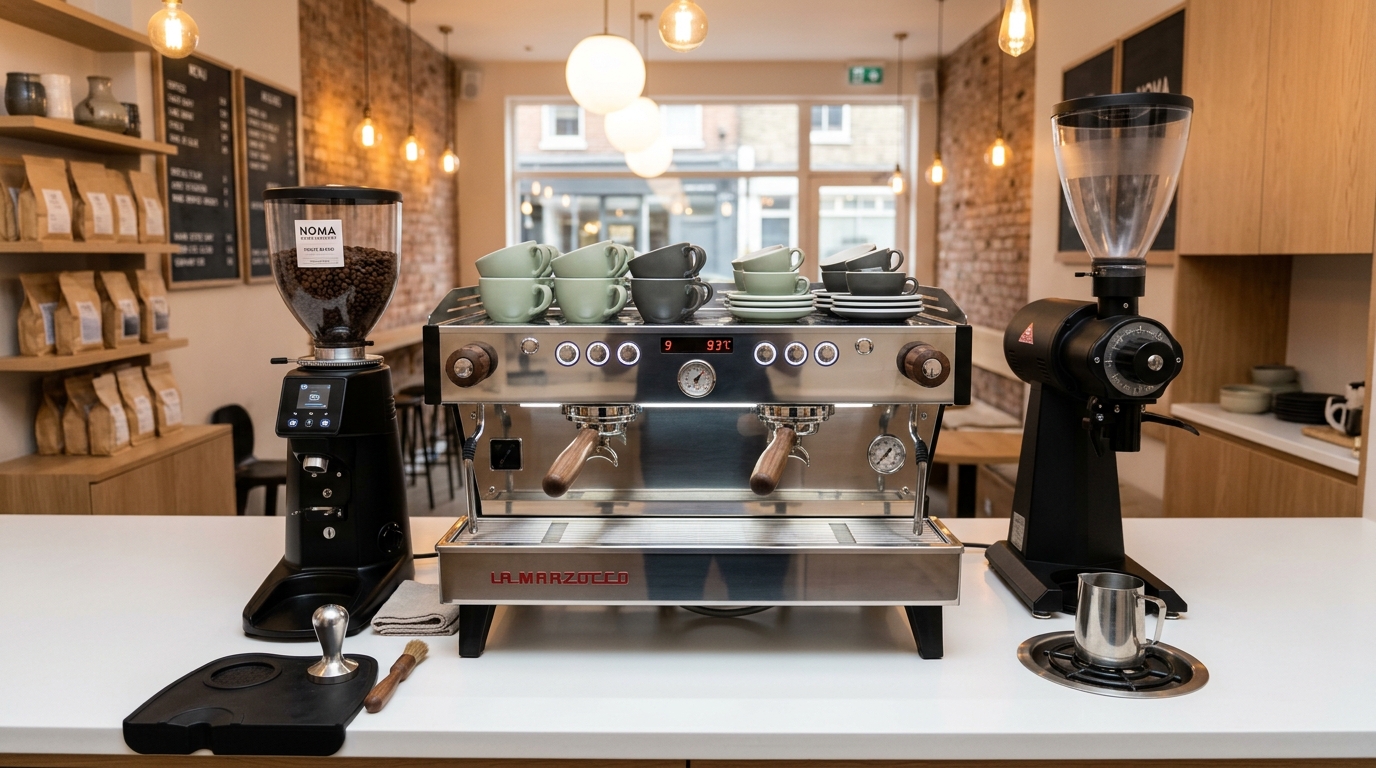
Opening an independent coffee shop or specialty espresso bar is among the most rewarding ventures in the hospitality industry. Yet according to commercial food service actuarial data, equipment miscalculations represent one of the leading causes of early capital burn and operational failure.
New operators frequently make two fatal procurement errors: either purchasing residential-grade equipment that burns out under sustained morning customer rushes, or overspending hundreds of thousands of dollars on industrial machinery before verifying their actual daily drink volume.
To build an efficient, profitable coffee program, equipment cannot be treated as an afterthought. Your machines dictate your architectural counter ergonomics, electrical service requirements (single-phase 120V versus three-phase 208-240V), direct plumbing lines, and municipal health department permits.
This master checklist provides an exhaustive, engineer-verified breakdown of every machine, utility connection, and operational tool required to build a compliant, high-performing commercial cafe in 2026.
1. Front-of-House (FOH) Espresso Bar Infrastructure
The front espresso station is the visual centerpiece and operational revenue engine of your store. Every second wasted reaching for pitchers, ice, or knock boxes directly diminishes peak-hour throughput and customer retention.
+-----------------------------------------------------------------------+
|                       FRONT ESPRESSO COUNTER                          |
|                                                                       |
|   +---------------+   +-------------------+   +-------------------+   |
|   | Espresso Grnd |   | 2-Group Espresso  |   | Decaf / Single Gr |   |
|   | On-Demand     |   | Commercial Unit   |   | On-Demand Burrs   |   |
|   +---------------+   +-------------------+   +-------------------+   |
|           |                     |                       |             |
|   +---------------+   +-------------------+   +-------------------+   |
|   | Tamping Mat   |   | Built-in Rinser   |   | Knock Chute       |   |
|   | Precision Tamper  | & Drainage Well   |   | Under-Counter Bin |   |
|   +---------------+   +-------------------+   +-------------------+   |
+-----------------------------------------------------------------------+
Core Espresso Machinery Checklist:
- Commercial Espresso Machine (2-Group or 3-Group):
- Minimum requirement: Dual boiler or multi-boiler saturated grouphead architecture with independent PID temperature control.
- Sizing guideline: If your shop projects 100 to 350 drinks per day, a 2-group commercial espresso machine provides optimal recovery balance without monopolizing valuable linear counter space. Operators opening mobile carts or low-volume kiosks should review our 1-Group vs. 2-Group volume comparison.
- Electrical requirement: Dedicated 208V–240V, 30A or 50A branch circuit.
- Certification: NSF/ANSI Standard 4 and UL 197 listing tags permanently riveted to chassis.
- Dedicated Espresso Grinders (Primary + Decaf/Single-Origin):
- High-volume cafes require at least two commercial burr grinders on bar: one dedicated to house espresso blend and a secondary unit for decaf or rotating single-origins.
- Look for 64mm to 75mm flat burrs with active thermal heat dissipation fans to prevent coffee ground heating during 8:00 AM rush hours. Consult our commercial grinder benchmark for grind-by-weight versus on-demand dosing speed comparisons.
- In-Counter Pitcher Rinser:
- Cold-water pressurized blast rinser set flush into stainless steel or quartz counter with dedicated 3/8-inch supply line and 1.5-inch gravity drain.
- Embedded Knock Box / Chute:
- Under-counter open bottom chute passing through the countertop directly into a heavy-duty trash receptacle to eliminate noise and counter clutter.
2. High-Volume Batch Brew & Drip Coffee Infrastructure
While handcrafted espresso drives beverage margins, batch brewed filter coffee generates 25% to 40% of total morning volume with superior labor efficiency. A customer ordering drip coffee should receive their cup within 30 seconds of ordering.
+-----------------------------------------------------------------------+
|                    HIGH-VOLUME BATCH BREW STATION                     |
|                                                                       |
|   +-----------------------+           +---------------------------+   |
|   | Twin Commercial       |  ======>  | Dual 1.5-Gallon Thermal   |   |
|   | Batch Brewer (Fetco)  |           | Insulated Servers / Urns  |   |
|   +-----------------------+           +---------------------------+   |
|               ^                                     |                 |
|   +-----------------------+                         v                 |
|   | Bulk Retail / Batch   |           +---------------------------+   |
|   | Grinder (Mahlkönig)   |           | Instant Hot Water Tower   |   |
|   +-----------------------+           | (Americanos & Tea Dosing) |   |
|                                       +---------------------------+   |
+-----------------------------------------------------------------------+
Batch Brew Equipment Checklist:
- Commercial Twin Automatic Coffee Brewer:
- Brands: Fetco CBS Series, Curtis G4, or Bunn ICB.
- Must feature pulse brewing, programmable pre-wet percentages, bypass capability, and digital temperature control down to 1.0°F.
- Sizing: Twin 1.0 to 1.5-gallon stations capable of brewing up to 15 gallons of fresh coffee per hour during continuous morning service.
- Thermal Dispensers / Servers (3 to 4 Units Minimum):
- Vacuum-insulated stainless steel shuttle urns (no direct electric heating plates, which bake and scorch brewed coffee within 20 minutes).
- Bulk Commercial Grinder:
- Dedicated retail and batch grinder equipped with 80mm to 98mm high-throughput burrs (e.g., Mahlkönig EK43 or Bunn G3) capable of grinding 100g of coffee in under 5 seconds with minimal fines.
- Precision Water Tower / Hot Water Dispenser:
- Dedicated 5-gallon on-demand hot water boiler (e.g., Marco Ecoboiler or Curtis WB5GT) providing immediate 205°F water for Americanos and loose-leaf teas without siphoning heat from the espresso machine boiler.
3. Water Treatment, Filtration & Utility Infrastructure
Never plug a commercial coffee machine into raw municipal tap water. Water chemistry governs two critical variables: extraction solvency (taste) and internal equipment longevity (limescale and corrosion).
+-----------------------------------------------------------------------+
|                     COMMERCIAL WATER TREATMENT TRAIN                  |
|                                                                       |
| [City Water Supply]                                                   |
|         |                                                             |
|         v                                                             |
|   +---------------------------------------------------------------+   |
|   | Stage 1: 5-Micron Sediment Filter (Silt & Particulates)       |   |
|   +---------------------------------------------------------------+   |
|         |                                                             |
|         v                                                             |
|   +---------------------------------------------------------------+   |
|   | Stage 2: Catalytic Activated Carbon Block (Chlorine & Chloramine)|
|   +---------------------------------------------------------------+   |
|         |                                                             |
|         v                                                             |
|   +---------------------------------------------------------------+   |
|   | Stage 3: Reverse Osmosis (RO) Membrane or BWT Ion Exchange    |   |
|   +---------------------------------------------------------------+   |
|         |                                                             |
|         +-----------------------+                                     |
|         | (Pure Permeate)       | (Mineral Bypass Blend)              |
|         v                       v                                     |
|   +---------------------------------------------------------------+   |
|   | Stage 4: Remineralization Mixing Valve (Magnesium / Calcium)  |   |
|   +---------------------------------------------------------------+   |
|         |                                                             |
|         v                                                             |
|   +---------------------------------------------------------------+   |
|   | Stage 5: Pressurized Accumulator Tank (Constant 45-60 PSI)    |   |
|   +---------------------------------------------------------------+   |
|         |                                                             |
|         +=====> To Espresso Machine, Batch Brewer & Ice Machine       |
+-----------------------------------------------------------------------+
Water Quality Verification Matrix (SCA Standard Compliance):
| Water Chemical Parameter | Target SCA Standard | Risk of Low Level | Risk of Excessive Level |
|---|---|---|---|
| Total Dissolved Solids (TDS) | 75 – 250 ppm | Flat, sour extraction | Heavy mud taste, mineral scaling |
| Total Hardness (CaCO3) | 50 – 175 ppm | Excessive acidity | Severe limescale boiler failure |
| Total Alkalinity | 40 – 75 ppm | Unstable pH, rapid corrosion | Chalky espresso crema, muted fruit |
| pH Range | 6.5 – 8.0 | Acid pitting of copper lines | Bitter, astringent taste profile |
| Chlorine / Chloramine | 0.0 mg/L | None | Harsh chemical odor, rubber degradation |
| Operating Water Pressure | 45 – 60 PSI | Cavitation in rotary pumps | Ruptured solenoid valves & fittings |
Detailed architectural specifications and plumbing rough-in diagrams are available in our Commercial Water Filtration Guide.
4. Back-of-House (BOH) Refrigeration, Ice & Dishwashing
A coffee shop is a licensed food service facility. Municipal health inspectors enforce strict standards regarding dairy storage temperatures (below 41°F / 5°C) and multi-compartment sanitizing sinks.
+-----------------------------------------------------------------------+
|                    BACK-OF-HOUSE SANITATION & COLD CHAIN              |
|                                                                       |
|   +-------------------+   +-------------------+   +---------------+   |
|   | 3-Compartment Sink|   | Commercial Dish-  |   | Handwashing   |   |
|   | Wash-Rinse-Sanitize   | washer (High-Temp)|   | Sink Only     |   |
|   +-------------------+   +-------------------+   +---------------+   |
|                                                                       |
|   +-------------------+   +-------------------+   +---------------+   |
|   | Reach-in Dairy    |   | Under-Counter Bar |   | Commercial    |   |
|   | Storage Cooler    |   | Refrigerators (2) |   | Ice Machine   |   |
|   +-------------------+   +-------------------+   +---------------+   |
+-----------------------------------------------------------------------+
Cold Storage & Sanitation Checklist:
- Under-Counter Bar Refrigeration:
- Two dedicated front-bar under-counter refrigerators (e.g., True TUC-27 or Beverage-Air) located directly beneath or adjacent to the espresso station for whole milk, oat milk, almond milk, and syrups.
- BOH Storage Refrigerator:
- One two-door reach-in commercial refrigerator (True T-49 or Turbo Air) for bulk dairy crate storage, cold brew kegs, and packaged perishables.
- Commercial Ice Machine with Storage Bin:
- Air-cooled modular ice maker (Scotsman, Hoshizaki, or Manitowoc) producing 300 to 500 lbs of half-cube ice per 24 hours. Under-sizing an ice machine causes catastrophic failures during summer heat waves.
- Three-Compartment Sink with Drainboards:
- Mandatory NSF-listed stainless steel basin: Wash (110°F soapy wash) → Rinse (clean warm water) → Sanitize (chemical quaternary ammonium or 171°F hot sanitize).
- Dedicated Handwashing Sinks (Minimum 2):
- Health code dictates dedicated handwashing sinks with splash guards, touchless soap dispensers, and disposable paper towels within 25 feet of all beverage preparation areas.
5. Specialty Barista Smallwares & Precision Accessories
Smallwares dictate barista efficiency, drink consistency, and daily cleaning execution. Operators should plan to stock the following items before their health inspection:
+-----------------------------------------------------------------------+
|                       BARISTA SMALLWARES MATRIX                       |
|                                                                       |
|   +----------------------+   +------------------+   +-------------+   |
|   | Precision Scales (3) |   | Milk Pitchers    |   | Cleaning    |   |
|   | Acaia Lunar / Pearl  |   | 12oz, 20oz, 32oz |   | Chemicals   |   |
|   +----------------------+   +------------------+   +-------------+   |
|   | Calibrated Tampers   |   | Knock Boxes (2)  |   | Towels (48) |   |
|   | 58.5mm Flat Base     |   | Rubber Bar Mats  |   | Microfiber  |   |
|   +----------------------+   +------------------+   +-------------+   |
+-----------------------------------------------------------------------+- Precision Waterproof Brew Scales (3 Units):
- Two low-profile scales fitted onto the espresso machine drip tray (0.1g accuracy with auto-timer like Acaia Lunar or Timemore Black Mirror) and one larger scale for dry batch weighing.
- Stainless Steel Steaming Pitchers:
- Six 12oz pitchers (for cortados and flat whites), six 20oz pitchers (for standard 12oz and 16oz lattes), and two 32oz pitchers for bulk batch steaming.
- Calibrated Tamping Tools & Distribution Wedges:
- 58.5mm precision-machined flat tampers (e.g., Pullman BigStep or Normcore v4 spring-loaded) matching precision basket diameters (VST or IMS).
- Sanitation Chemicals & Brushes:
- Approved backflush detergent powder (Urnex Cafiza), steam wand milk line cleaner (Rinza), grinder burr cleaning tablets (Grindz), and angled grouphead nylon scrubbing brushes. Consult our Preventative Maintenance Guide for exact daily chemical dosing schedules.
- Microfiber Towels:
- Minimum inventory of 48 commercial microfiber bar towels: dedicated color-coding (e.g., blue for steam wands, brown for coffee counter, yellow for general sanitizing).
6. Complete Coffee Shop Startup Equipment Budget Tiers
Equipment costs vary dramatically depending on whether you are launching an agile mobile cart, a neighborhood cafe, or a multi-station flagship roastery.
| Category / Station | Mobile Cart / Kiosk (50–100 cups/day) | Neighborhood Cafe (150–350 cups/day) | High-Volume Flagship (400–800+ cups/day) |
|---|---|---|---|
| Commercial Espresso Machine | $4,500 – $6,500 (1-Group) | $11,000 – $16,500 (2-Group Dual Boiler) | $22,000 – $32,000 (3-Group Multi-Boiler) |
| Commercial Grinders (x2) | $1,800 – $2,500 | $3,200 – $5,200 | $5,500 – $8,500 (GbW High-Speed) |
| Batch Brewer & Dispensers | $1,200 – $1,800 | $2,800 – $4,200 | $5,000 – $7,500 |
| Water Filtration & RO System | $900 – $1,400 | $2,200 – $4,500 (RO + Remineralizer) | $5,000 – $8,500 (Dual Commercial RO) |
| Refrigeration & Ice Machine | $2,500 – $4,000 | $8,500 – $14,000 | $16,000 – $26,000 (Walk-In Cooler) |
| Sinks, Plumbing & Disconnects | $1,500 – $2,500 | $4,500 – $8,000 | $9,000 – $16,000 |
| Barista Smallwares & Scales | $800 – $1,200 | $1,800 – $2,800 | $3,500 – $5,500 |
| POS Hardware & Cash Drawers | $1,000 – $1,500 | $2,200 – $3,500 | $4,500 – $7,000 (Multi-Terminal) |
| TOTAL ESTIMATED CAPITAL | $14,200 – $21,400 | $46,200 – $74,700 | $90,500 – $147,000 |
For financing models, leasing versus purchasing tax write-offs, and return on investment breakdowns, review our Startup Equipment Budget & ROI Guide.
7. Equipment Procurement Strategy: Buy New, Refurbished, or Lease?
+-----------------------------------------------------------------------+
|                    CAPITAL PROCUREMENT DECISION TREE                  |
|                                                                       |
|   Is initial cash flow under $40,000?                                 |
|      |                                                                |
|      +--- YES ===> Explore Commercial Equipment Leasing               |
|      |             ($1 Buyout Option / Section 179 Deductions)        |
|      |                                                                |
|      +--- NO  ===> Are you purchasing a core critical asset           |
|                    (Espresso Machine / Water RO)?                     |
|                      |                                                |
|                      +--- YES ===> Buy Brand New with Factory Warranty|
|                      |                                                |
|                      +--- NO  ===> Consider Certified Refurbished     |
|                                    (Sinks, Tables, Bulk Grinders)     |
+-----------------------------------------------------------------------+
Option A: Purchasing Brand New (Recommended for Core Espresso & RO)
- Advantages: Full 1 to 2-year manufacturer parts and labor warranty, certified NSF/UL paperwork for health inspections, zero hidden scale or wiring fatigue, priority support from authorized distributor networks.
- Disadvantages: Highest upfront capital expenditure.
Option B: Certified Refurbished (Ideal for Stainless Steel Sinks, Ice Bins & Bulk Grinders)
- Advantages: 30% to 50% discount against list prices. Work tables, speed rails, and commercial sinks have no moving parts and do not degrade.
- Caution: Never purchase a used commercial espresso machine from online classified ads without having an authorized field technician perform an internal borescope inspection of boilers, heating element scale, and electronic mainboards.
Option C: Commercial Equipment Leasing / Financing
- Advantages: Preserves working capital for payroll and marketing during the critical first six months of operations. Monthly lease payments are typically 100% tax-deductible as operating business expenses under IRS Section 179.
- Structure: Aim for a 36-month or 48-month equipment lease with a “$1 Buyout” option upon lease maturity.
8. Pre-Opening Equipment Commissioning Protocol
Before scheduling your health department inspection and public soft launch, follow this 48-hour equipment commissioning checklist:
- Verify Water Chemistry Prior to Startup:
Do not open the water inlet valve to your espresso machine until your water filtration system has been flushed for 15 minutes and tested for total hardness (target: 50–125 ppm) and line pressure (target: 45–60 PSI). - Inspect Electrical Voltage & Phase:
Have your licensed commercial electrician measure operating line voltage across both hot legs under load. True 208V installations require correct element wattage matching to prevent slow boiler recovery. Consult our Electrical and Plumbing Guide for wiring diagrams. - Calibrate Pump Pressure (9 Bar Standard):
Mount a portafilter pressure gauge to each grouphead and adjust the rotary vein pump bypass screw until pressure stabilizes at exactly 9.0 bar (130 PSI) with blind basket engaged. - Program Volumetric Shot Dosages:
Calibrate electronic dosing buttons using a digital scale: program Single Shot (18g dry in / 36g liquid out in 27–30s) and Continuous Manual flush modes. - Establish Preventative Maintenance SOPs:
Post daily chemical backflushing and steam wand purging checklists on the staff bulletin board to ensure consistent execution from Day 1.
Frequently Asked Questions
What electrical service does a commercial coffee shop need?
Most specialty coffee shops require a 200A to 400A, 120V/208V–240V, 3-phase commercial electrical panel. Core machines like 2-group espresso units, rapid water towers, and high-temp dishwashers each require dedicated 208-240V circuits with separate circuit breakers.
Can I lease coffee equipment before I have established business credit?
Yes. Commercial food equipment financing brokers frequently work with new startups using the personal credit score of the business founders (typically requiring a score of 680+) or requiring a 10% to 15% upfront security deposit.
How much counter space should I allocate for the coffee bar?
A standard commercial espresso bar requires a minimum of 14 to 18 linear feet of counter space with a depth of 30 to 36 inches. This provides adequate footprint for the espresso machine (28–34 inches wide), two grinders, pitcher rinser, knock box, batch brewer, and cash wrap.
Frequently Asked Technical Questions
What is the single most expensive piece of equipment when opening a coffee shop?
The commercial espresso machine represents the largest capital expenditure, typically ranging between $9,500 and $24,000 for an NSF-certified, dual-boiler 2-group or 3-group unit from reputable manufacturers like La Marzocco, Nuova Simonelli, or Synesso.
How much total capital should be budgeted for coffee shop equipment?
For an independent retail specialty cafe (1,000 to 1,500 sq ft), expect to invest between $45,000 and $85,000 in commercial machinery, water filtration, under-counter refrigeration, ice machines, and smallwares.
Can I use residential or semi-commercial appliances to save money at launch?
No. Local health departments in all 50 US states and Canada require food equipment to carry NSF/ANSI Standard 4, UL 197, or CSA commercial sanitation certifications. Residential equipment lacks duty-cycle thermal recovery, voids commercial lease insurance, and violates municipal health codes.
Why is water filtration considered core coffee shop equipment rather than plumbing?
Unfiltered municipal water destroys commercial espresso machine boilers through aggressive calcium carbonate scaling or pitting chloride corrosion. Over 70% of early machine warranty claims originate from improper water treatment.