Commercial Ice Machine Sizing & Filtration for Coffee Shops (2026)
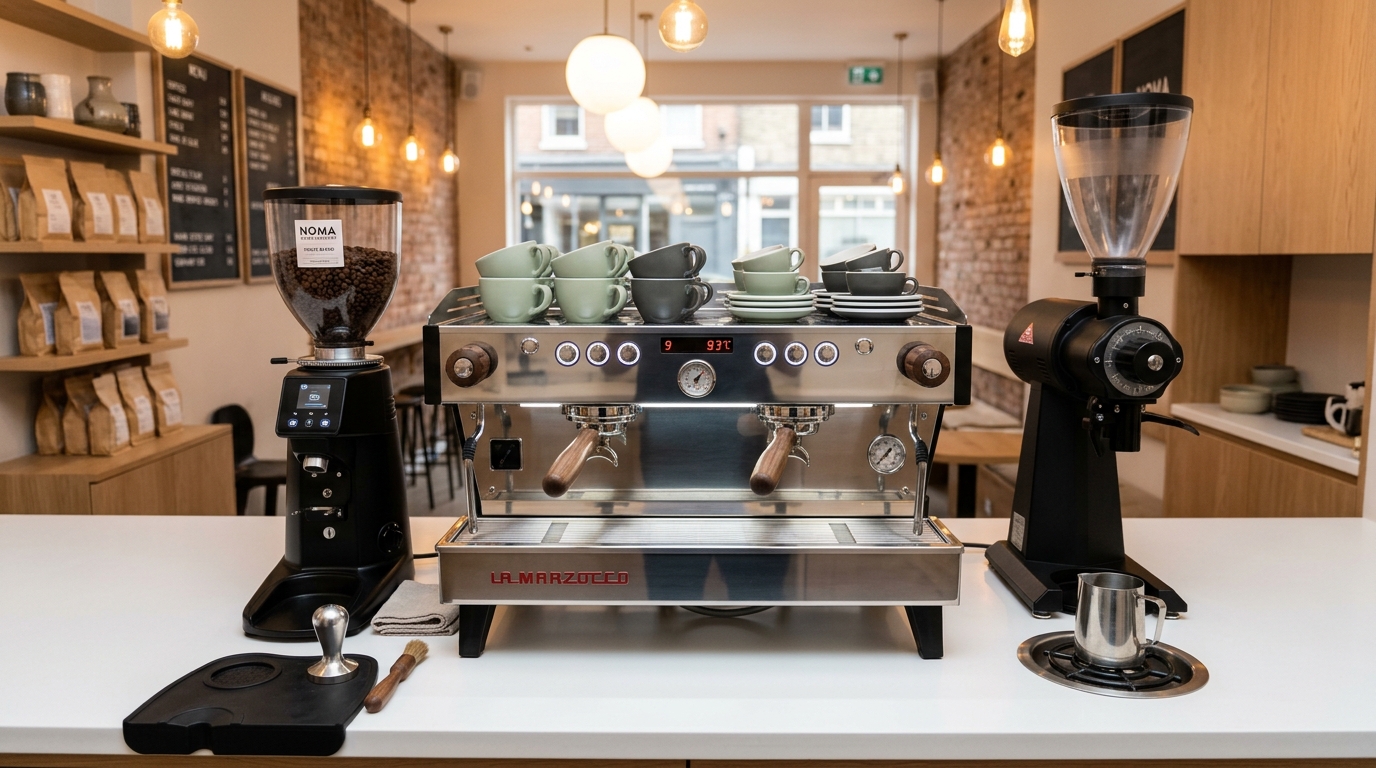
When coffee entrepreneurs design their dream cafe, their minds are consumed by romantic imagery: a gleaming dual-boiler espresso machine, artisan ceramic cups, handcrafted pour-over drippers, and vintage reclaimed wood counters.
Hardly anyone dreams about the commercial ice machine.
Yet according to National Coffee Association (NCA) market data, over 70% of total beverage revenue in modern commercial cafes comes from cold and iced drinks: iced lattes, cold brew on draft, iced matcha, flash-chilled single origins, and shaken espresso tonics.
On a sweltering 90°F July morning, your cafe’s entire profitability hinges on a single mechanical question: do you have enough hard, crystal-clear ice to survive the rush?
Run out of ice at 9:15 AM on a summer Saturday, and your business grinds to an immediate, catastrophic halt. Customers will walk out of your line, cross the street to your competitor, and leave scathing online reviews.
Furthermore, sending an employee in a panic to buy twenty bags of gas-station ice is not only an embarrassing operational failure—it violates municipal health codes because commercial ice must be produced and stored in an NSF-certified, sanitary closed system.
This comprehensive technical guide outlines the mathematical equations for sizing commercial ice machines, compares ice geometries (Hoshizaki Crescent vs. Scotsman Nugget vs. Manitowoc Dice), evaluates air-cooled vs. water-cooled compressors, and details the water filtration chemistry required to prevent evaporator scale and bacterial slime in 2026.
1. The Ice Sizing Mathematical Formula: Auditing Peak Daily Demand
To purchase the correct commercial ice machine, you must calculate total daily ice consumption using realistic beverage portioning mathematics:
+--------------------------------------------------------------------------+
|                  COMMERCIAL CAFE DAILY ICE USAGE FORMULA                 |
|                                                                          |
|   1. BEVERAGE PORTION CONSUMPTION:                                       |
|      - 16oz Standard Iced Drink: Uses 7.0 oz (0.44 lbs) of ice           |
|      - 24oz Large Iced Drink:    Uses 12.0 oz (0.75 lbs) of ice          |
|      - 16oz Blended Frappe:      Uses 14.0 oz (0.88 lbs) of ice          |
|                                                                          |
|   2. THE 400-DRINK COMMERCIAL CAFE MODEL:                                |
|      - Total Daily Drinks: 400 drinks                                    |
|      - Iced Drink Ratio: 70% (280 iced drinks daily)                     |
|                                                                          |
|   3. THE CALCULATION:                                                    |
|      - 200 Standard (16oz) Drinks × 0.44 lbs = 88 lbs of ice             |
|      -  60 Large (24oz) Drinks    × 0.75 lbs = 45 lbs of ice             |
|      -  20 Blended Drinks         × 0.88 lbs = 17.6 lbs of ice           |
|      - Pitcher Rinsing & Beverage Prep Spill Waste: 25 lbs               |
|      -----------------------------------------------------------------   |
|      ACTUAL DAILY ICE MELT CONSUMPTION: 175.6 lbs of ice                 |
|                                                                          |
|   4. THE 40% SUMMER DERATING SAFETY FACTOR:                              |
|      - Ice machines produce ice 25% to 35% SLOWER when ambient kitchen   |
|        temperature hits 90°F and incoming tap water hits 70°F!           |
|      - Sizing Rule: Multiply Actual Daily Usage by 1.75!                 |
|      - 175.6 lbs × 1.75 = 307.3 lbs minimum production.                 |
|                                                                          |
|   >>> RECOMMENDATION: 450 to 500 LB / 24-HOUR COMMERCIAL MACHINE <<<     |
+--------------------------------------------------------------------------+
The AHRI Ambient Temperature Rating Trap:
When an ice machine manufacturer advertises a “500-pound machine,” that rating is tested under unrealistic laboratory conditions: 70°F ambient air and 50°F incoming water (AHRI Standard 810).
On a hot summer day in July, when your cafe’s utility room heats up to 90°F (32°C) and incoming municipal water warms to 70°F (21°C), compressor efficiency plunges. A machine rated for 500 lbs will only produce roughly 360 to 380 lbs in reality.
Never size an ice machine based on winter performance. Always size for your peak summer heatwave.
2. Storage Bin Sizing vs. Compressor Harvest Capacity
A critical mistake made by new cafe owners is buying a high-output ice maker head mounted on a tiny storage bin.
+--------------------------------------------------------------------------+
|                  HARVEST RATE VS. STORAGE CAPACITY DYNAMICS              |
|                                                                          |
|   SCENARIO: 500 lb/24h Ice Maker Mounted on Small 150 lb Bin             |
|   - Over the night, the machine produces ice until the bin fills (150 lb)|
|   - The mechanical bin thermostat trips; THE MACHINE SHUTS OFF AT 3:00 AM|
|   - 7:00 AM Rush Hits: Baristas scoop 180 lbs of ice between 7am and 10am|
|   - At 9:15 AM: THE BIN IS COMPLETELY EMPTY!                             |
|   - The machine is running at full power, but can only produce 20 lbs    |
|     per hour (a mere 1/3 of a pound per minute!).                        |
|   - RESULT: The bar runs out of ice during peak commuter rush.           |
+--------------------------------------------------------------------------+
The Sizing Golden Rule:
Your insulated ice storage bin capacity should equal at least 65% to 80% of your machine’s 24-hour harvest rating.
For a 500 lb/day commercial machine, pair it with a 350 to 400 lb capacity insulated storage bin (such as the Hoshizaki B-300 or Manitowoc D-400). This guarantees that when your baristas open the doors at 6:30 AM, they have an immense 350-pound mountain of ice ready to absorb the peak morning wave without running dry.
3. Ice Geometry Showdown: Crescent vs. Nugget vs. Full Dice
The physical shape, density, and crystallization of the ice cube directly dictates melting speed and beverage dilution:
+--------------------------------------------------------------------------+
|                  COMMERCIAL ICE GEOMETRY COMPARISON                      |
|                                                                          |
|   1. CRESCENT CUBE (HOSHIZAKI EXCLUSIVE)                                 |
|   - Geometry: Half-moon, crescent-shaped solid block.                    |
|   - Density: 100% Solid, Hard, Crystal Clear (Zero Air Pockets).         |
|   - MELT RATE: Ultra-Slow. Individual cubes nestle together without      |
|     bridging, allowing liquid coffee to flow smoothly between them.      |
|   - VERDICT: THE GOLD STANDARD FOR SPECIALTY COLD BREW & ICED LATTES.    |
|                                                                          |
|   2. NUGGET / CHEWBLET ICE (SCOTSMAN / FOLLETT)                          |
|   - Geometry: Soft, porous, compressed flaked ice pellets.              |
|   - Density: 70% Ice / 30% Air and Micro-Pores (Soft and Chewable).      |
|   - MELT RATE: Extremely Fast. Absorbs coffee liquid like a sponge.      |
|   - VERDICT: Beloved in Southern drive-thrus and sweet tea concepts;     |
|     DANGEROUS for delicate light-roast specialty coffee (melts too fast).|
|                                                                          |
|   3. HALF DICE / FULL DICE (MANITOWOC / BLUESTONE)                       |
|   - Geometry: Classic rhomboid square cubes.                             |
|   - Density: 90% Solid; fast cooling velocity.                          |
|   - MELT RATE: Moderate. Excellent for cocktail lounges and frappes.     |
|   - VERDICT: Capable commercial all-rounder with excellent value.        |
+--------------------------------------------------------------------------+
4. Compressor Cooling Architecture: Air-Cooled vs. Water-Cooled
When purchasing a commercial ice machine, cafe operators must select the cooling medium for the refrigeration condenser:
+--------------------------------------------------------------------------+
|                  AIR-COOLED VS. WATER-COOLED ICE MACHINES                |
|                                                                          |
|   AIR-COOLED COMPRESSORS (THE INDUSTRY STANDARD):                        |
|   - Mechanics: Internal electric fan draws ambient room air across coils.|
|   - Water Consumption: ZERO gallons wasted on cooling.                   |
|   - Installation: Simple electrical plug + water supply + drain.         |
|   - Environmental Impact: 100% Eco-Friendly. Low utility bills.          |
|   - REQUIREMENT: Needs at least 8" of clear ventilation space around     |
|     the machine; vents heat into the utility room.                       |
|                                                                          |
|   WATER-COOLED COMPRESSORS (THE UTILITY DISASTER):                       |
|   - Mechanics: Passes cold tap water across coils to cool refrigerant;   |
|     dumps that hot water straight down the sewer drain!                  |
|   - WATER WASTE: Burns 75 to 120 Gallons of drinking water for EVERY     |
|     100 pounds of ice produced (Over 180,000 gallons wasted annually!).  |
|   - LEGAL STATUS: Banned by municipal environmental codes in many cities.|
|   - VERDICT: NEVER BUY A WATER-COOLED ICE MACHINE FOR A COFFEE SHOP.     |
+--------------------------------------------------------------------------+
5. Head-to-Head Specification Matrix: Flagship 500-lb Ice Machines
| Technical Specification | Hoshizaki KM-520MAJ (Crescent) | Scotsman Prodigy Plus C0530MA (Dice) | Manitowoc Indigo NXT iT0500 (Half Dice) |
|---|---|---|---|
| Manufacturing Origin | Peachtree City, Georgia, USA | Vernon Hills, Illinois, USA | Manitowoc, Wisconsin, USA |
| Ice Cube Geometry | Crescent Cube (Solid Hard) | Full Dice or Half Dice | Full Dice or Half Dice |
| Daily Harvest (70/50°F) | 523 lbs / 24 Hours (237 kg) | 525 lbs / 24 Hours (238 kg) | 500 lbs / 24 Hours (227 kg) |
| Daily Harvest (90/70°F) | 402 lbs / 24 Hours (182 kg) | 380 lbs / 24 Hours (172 kg) | 385 lbs / 24 Hours (175 kg) |
| Evaporator Construction | Double-Sided Stainless Steel | Nickel-Plated Copper Grid | Nickel-Plated Copper Grid |
| Cooling Method | Air-Cooled (Front / Top Exhaust) | Air-Cooled (Side / Top) | Air-Cooled (Airflow Forward) |
| Condenser Cleanability | Removable Air Filters (Washable) | Removable Air Filters | Easy-Clean Front Filter |
| Electrical Power | 115V / 60Hz / 1-Phase (10.2 A) | 115V / 60Hz / 1-Phase (13.5 A) | 115V / 60Hz / 1-Phase (11.5 A) |
| Sanitation Technology | H-GUARD Plus Antimicrobial Agent | AgION Antimicrobial Molding | DuraTech Clear Coating + LuminIce II |
| Matching Bin Capacity | B-300 (300 lbs) / B-500 (500 lbs) | B530P (430 lbs) | D-400 (365 lbs) / D-570 (532 lbs) |
| Typical Machine Head Cost | $3,600 – $4,200 | $3,400 – $3,900 | $3,200 – $3,700 |
| Matching Bin Cost | $950 – $1,250 | $900 – $1,200 | $850 – $1,150 |
Why Hoshizaki Dominates Specialty Coffee:
The Hoshizaki KM Series is the undisputed champion of specialty coffee for one primary engineering reason: its evaporator plate is constructed from solid 304 stainless steel, whereas competitors utilize nickel-plated copper grids.
- Over years of aggressive acidic descaling and harsh water, nickel plating on copper grids inevitably chips and peels away, flaking toxic nickel into the ice bin and exposing raw copper.
- Hoshizaki’s double-sided stainless evaporator never peels, never pits, and lasts 15+ years under commercial abuse.
6. Water Filtration & Sanitation: Preventing Evaporator Scale and Slime
Because an ice machine freezes pure water while leaving dissolved minerals behind, the water reservoir becomes heavily concentrated with calcium and slime mold unless protected by upstream water treatment:
+--------------------------------------------------------------------------+
|                  ICE MACHINE WATER FILTRATION PROTOCOL                   |
|                                                                          |
|   1. CATALYTIC CARBON (CHLORINE STRIPPING):                              |
|      - Chlorine and chloramines attack copper and stainless evaporators. |
|      - High-capacity carbon block filtration is mandatory.               |
|                                                                          |
|   2. SUB-MICRON PARTICLE TRAPPING:                                       |
|      - Sediment particles create nucleation points that cause cloudy,    |
|        hollow, fragile ice cubes. Trap down to 0.5 microns.              |
|                                                                          |
|   3. POLYPHOSPHATE SCALE INHIBITION:                                     |
|      - Because ice machines operate at freezing temperatures (32°F / 0°C)|
|        polyphosphate sequestering crystals work with 100% efficiency,    |
|        chemically preventing calcium scale from binding to evaporators.  |
|                                                                          |
|   4. BI-ANNUAL CITRIC ACID CHEMICAL DE-LIME:                             |
|      - Run manufacturer-approved nickel-safe or stainless ice cleaner    |
|        through the automated clean cycle every six months.               |
+--------------------------------------------------------------------------+
Review our dedicated water treatment and facility guides:
- Commercial Coffee Water Filtration Guide: Scale Prevention
- OptiPure vs. Pentair Everpure vs. 3M Water Filtration
- How to Open a Coffee Shop: Comprehensive Equipment Checklist
7. The Final Verdict: Choosing the Right Ice System for Your Cafe
Buy the Hoshizaki KM-520MAJ (with B-300 or B-500 Bin) if:
- You operate a specialty coffee shop where crystal-clear, slow-melting ice that preserves cold brew and iced latte flavor is a core sensory priority.
- You want the legendary longevity of a solid 304 stainless steel evaporator that never peels or corrodes.
- You want the highest commercial resale value in restaurant refrigeration.
Buy the Scotsman Prodigy Plus C0530MA if:
- You want intelligent auto-monitoring diagnostics that display operating status on external indicator lights.
- You operate a high-volume drive-thru where fast-cooling dice or chewable nugget ice matches customer regional preferences.
Buy the Manitowoc Indigo NXT iT0500 if:
- You prioritize the lowest initial capital acquisition cost for a top-tier commercial 500-lb air-cooled machine. Review our Startup Equipment Budget Guide to structure equipment leasing.
Frequently Asked Technical Questions
How much ice does a typical commercial coffee shop use per day?
Because iced beverages represent 65% to 75% of total sales in modern North American cafes, a shop serving 400 total drinks daily typically prepares 260 to 300 iced beverages. Each 16oz iced drink uses roughly 7 to 8 ounces of ice, and 24oz drinks use 12 to 14 ounces. Including pitcher rinse waste and display chilling, daily ice consumption averages between 200 and 320 pounds. Cafes should size an ice machine producing at least 450 to 500 lbs/day to account for summer heatwaves and peak morning demand.
Why is Hoshizaki Crescent Cube ice preferred for specialty coffee over Nugget ice?
Hoshizaki Crescent Cubes are solid, hard, 100% dense ice formed by spraying water upward onto an inverted stainless steel evaporator plate, freezing only pure water while washing dissolved mineral solids down the drain. Because crescent cubes are dense and non-porous, they melt significantly slower than porous Nugget (chewable) ice, cooling cold brew and iced lattes without prematurely watering down delicate origin flavors.
Why are water-cooled commercial ice machines discouraged or banned in many cities?
Water-cooled ice machines pass continuous municipal drinking water over the condenser coils to cool the refrigerant gas, dumping that heated water straight down the sewer drain. A single water-cooled machine can waste between 70 and 120 gallons of clean water for every 100 pounds of ice produced (costing hundreds of dollars per month in utility bills). Many municipalities facing drought conditions legally prohibit water-cooled ice machines, mandating energy-efficient air-cooled units.
What is the difference between daily ice harvest capacity and storage bin capacity?
Daily harvest capacity is the total weight of ice the compressor can produce over a continuous 24-hour cycle under ideal conditions (e.g., 500 lbs/24h). Storage bin capacity is the physical weight of ice the insulated bin can hold before the shutoff sensor trips (e.g., 300 lbs). A cafe needs a storage bin large enough to hold at least 65% to 75% of daily production to guarantee a massive reserve during the intense 7:00 AM to 10:00 AM rush.
What water filtration is required to prevent slime and scale in an ice machine?
Commercial ice machines require dedicated multi-stage water filtration featuring catalytic carbon (to remove chlorine and chloramines that corrode evaporator plates) paired with sub-micron sediment filtration and polyphosphate scale inhibitors. In hard water regions (>150 PPM), scale coats the nickel or stainless freezing evaporator, causing ice cubes to freeze together in giant slabs or jamming the harvest cycle.